

Train Smarter in Less Space
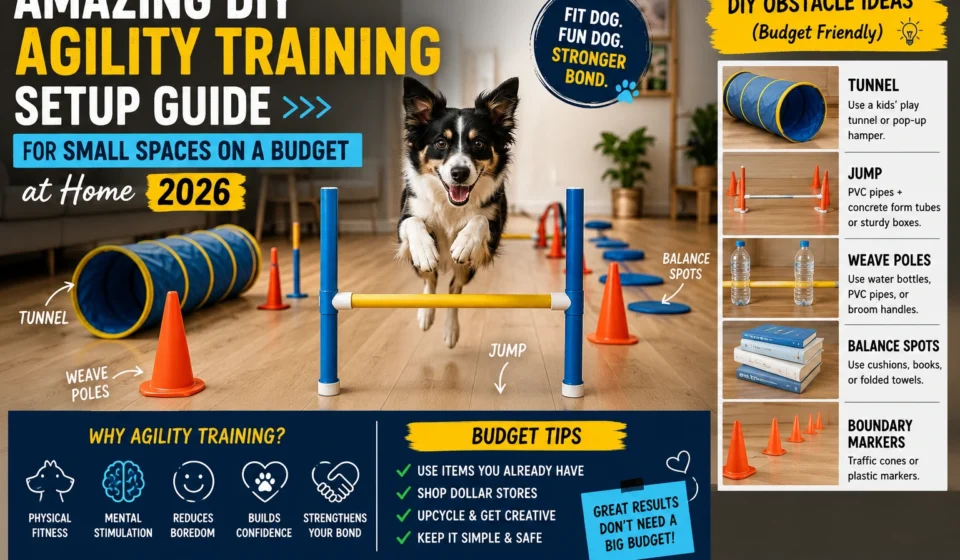
If you think agility training requires a big backyard or expensive gear, think again. This DIY agility training setup guide for small spaces on a budget at home shows you how to build a powerful training system using minimal space and simple materials.
Whether you’re improving athletic performance or training your dog, this guide gives you a high-impact, low-cost solution that actually works.
You can also read: Powerful Strength Training for Soccer Players at Home 2026: Build Explosive Power Fast
Why This DIY Agility Training Setup Guide for Small Spaces on a Budget at Home Works
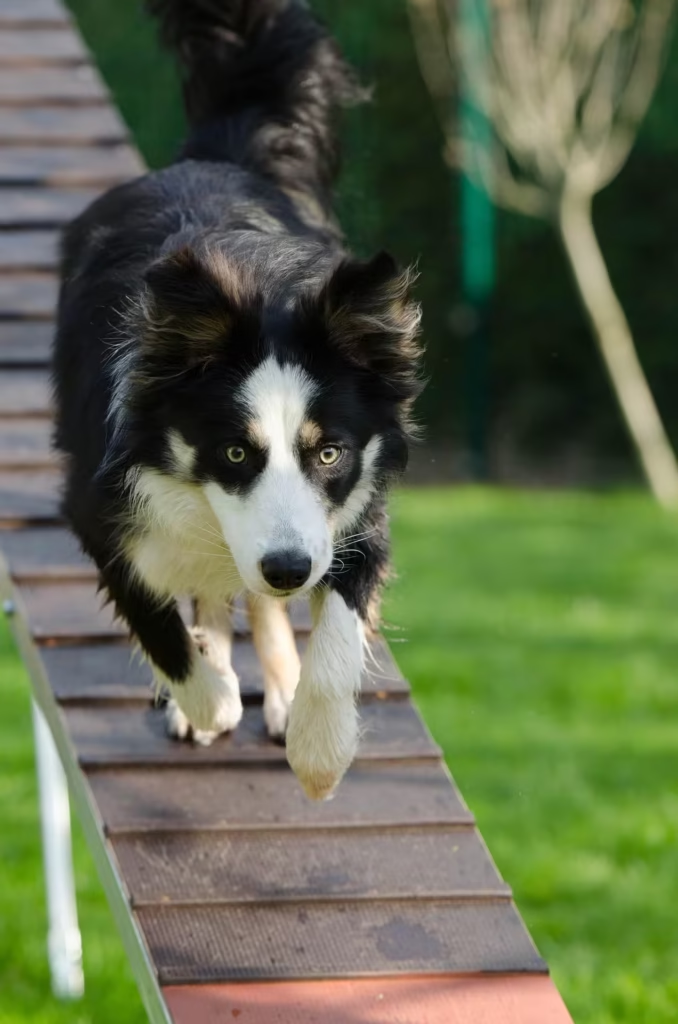
This approach focuses on efficiency and adaptability:
- Improves speed, coordination, and reaction time
- Works for both humans and dogs
- Requires very little space or money
- Easily scalable as you progress
The goal is not complexity it’s smart, repeatable movement patterns.
You can Also Read: How to Stop Nervousness Before a Game: Proven Tips That Work Fast
DIY Agility Training Setup Guide for Small Spaces on a Budget at Home (Core Principles)
Space Optimization Strategy
In this DIY agility training setup guide for small spaces on a budget at home, space is your biggest constraint—so use it wisely:
- Create linear or circular movement flows
- Use stackable or foldable equipment
- Keep transitions tight to maintain intensity
Minimum space:
- Indoor: 6×6 ft
- Ideal: 8×8 to 10×10 ft
Budget-First Equipment Planning
A key part of this DIY agility training setup guide for small spaces on a budget at home is minimizing cost:
Under $50, setup includes:
- PVC pipes or sticks
- Bottles or cones
- Rope or tape
- Chairs or boxes
Multi-Functional Design
Every item in your DIY agility training setup guide for small spaces on a budget at home should serve multiple purposes:
- Ladder → speed + coordination
- Cones → direction + weaving
- Boxes → jumps + balance
You can also visit: How to Increase Sprint Speed in Football at Home 2026 Without Costly Mistakes
Essential Equipment in a DIY Agility Training Setup Guide for Small Spaces on a Budget at Home
Agility Ladder (DIY Build)
Setup:
- Rope + tape or wooden strips
- 12–18 inch spacing
Benefits:
- Improves foot speed
- Enhances coordination
- Works for both humans and dogs
Cones or Markers
DIY options:
- Water bottles
- Shoes
- Buckets
Use cases in this DIY agility training setup guide for small spaces on a budget at home:
- Zig-zag runs
- Shuttle drills
- Dog weave training
Jump Obstacles
Build with:
- PVC pipes
- Chairs + broomstick
Tip: Always start low and increase gradually.
Tunnel Alternative
- Kids tunnel
- Large cardboard boxes
Adds reaction and directional training.
Balance Tools
- Cushions
- Folded mats
- Wooden board
Critical for stability and injury prevention.
Explaining benefits of agility training
Step-by-Step DIY Agility Training Setup Guide for Small Spaces on a Budget at Home
Step 1: Map Your Space
Divide your area into:
- Start zone
- Drill zone
- Finish/reset zone
This structure is essential in any DIY agility training setup guide for small spaces on a budget at home.
Step 2: Build Core Equipment
Start simple:
- Ladder
- Cones
- One jump
Step 3: Create a Flow Circuit
Example:
- Ladder drill
- Cone zig-zag
- Jump
- Sprint return
This flow maximizes the effectiveness of your DIY agility training setup guide for small spaces on a budget at home.
Step 4: Test and Optimize
- Adjust spacing
- Remove hazards
- Improve flow efficiency
Sample Routine Using a DIY Agility Training Setup Guide for Small Spaces on a Budget at Home
Beginner Routine (10–15 min):
- Ladder drills → 3 rounds
- Cone weave → 3 rounds
- Jumps → 5 reps
- Sprint → 2 rounds
Progression:
- Increase speed
- Add direction changes
- Combine drills
Expert Tips for Maximizing Your DIY Agility Training Setup Guide for Small Spaces on a Budget at Home
- Train 3–4 times per week
- Track performance (time, accuracy)
- Focus on quality movement
- Use non-slip surfaces
For dog training:
- Use treats and positive reinforcement
- Keep sessions short and engaging
Mistakes to Avoid in a DIY Agility Training Setup Guide for Small Spaces on a Budget at Home
- Overloading small spaces
- Using unstable equipment
- Skipping warm-ups
- Progressing too quickly
Proper warm-ups and safe surfaces are essential to prevent injuries, as highlighted by the Mayo Clinic.
FAQ: DIY Agility Training Setup Guide for Small Spaces on a Budget at Home
What is the minimum space required?
You can follow this DIY agility training setup guide for small spaces on a budget at home with just 6×6 ft, though 8×8 ft is more comfortable.
Can I really build this cheaply?
Yes. Most setups cost $20–$50 using household items.
Is this suitable for dog agility?
Absolutely. This DIY agility training setup guide for small spaces on a budget at home works perfectly for beginner to intermediate dog training.
How often should I train?
3–4 times per week is ideal for consistent progress.
What surface works best?
- Grass (best)
- Rubber mats
- Non-slip floors
Avoid hard or slippery surfaces.
Final Thoughts
This DIY agility training setup guide for small spaces on a budget at home proves that limited space and budget are not barriers they’re opportunities to train smarter.
Start with the basics, stay consistent, and refine your setup over time. Results will follow.
According to the American Kennel Club (AKC), agility training also strengthens communication and trust between dogs and owners.