
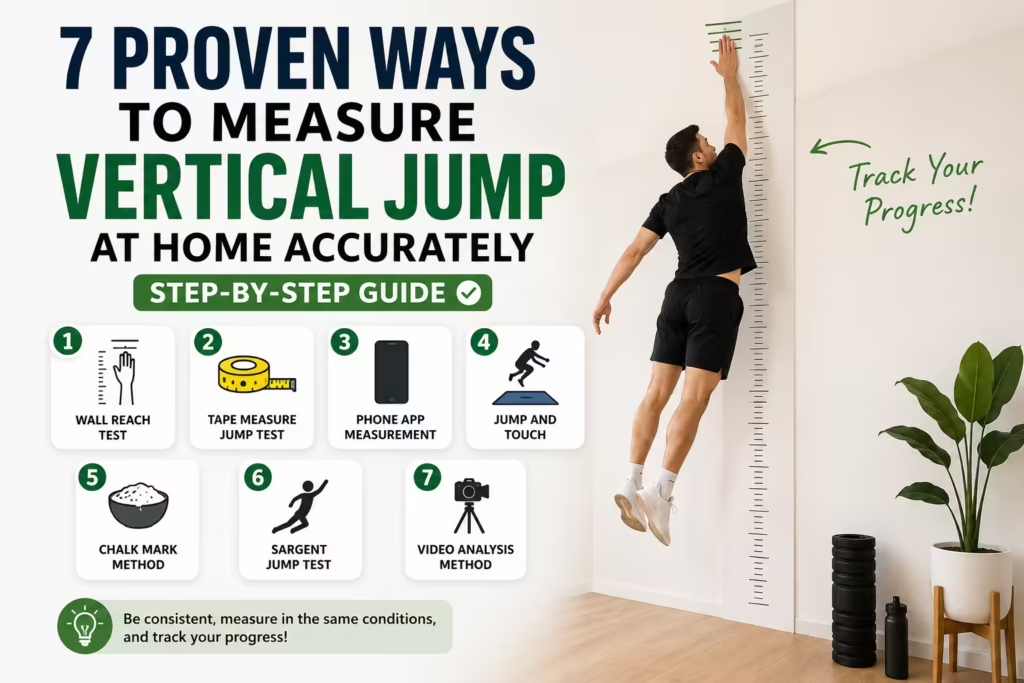

If you’ve ever wondered how high you can jump but don’t have access to expensive gym equipment, you’re not alone. The good news is you can measure your vertical jump at home accurately using simple methods that are both effective and reliable.
Whether you’re an athlete, fitness enthusiast, or beginner, tracking your vertical jump is one of the best ways to measure lower-body power and explosiveness. In this guide, you’ll discover 7 proven ways to measure vertical jump at home accurately, along with practical tips to get precise results every time.
If you’re measuring your vertical jump to track your weekend workouts, don’t miss our guide on The Science of Weekend Athletes: 7 Proven Reasons 2-Day Training Works, where you’ll discover how consistent two-day training can improve athletic performance.
What Is Vertical Jump?

A vertical jump is the maximum height you can leap upward from a standing position. It’s a key indicator of strength, power, and athletic performance, especially in sports like basketball, volleyball, and football. I will show you 7 proven ways to measure vertical jump at home accurately.
Measuring your vertical jump is one of the best ways to monitor lower-body power. Once you’ve recorded your results, check out How to Build Explosive Leg Power for Football at Home 2026 to learn exercises that can help you jump higher.
How to Measure Vertical Jump at Home Accurately (Quick Answer)
To measure vertical jump at home accurately:
- Measure your standing reach against a wall
- Jump as high as possible and mark the highest point
- Subtract your standing reach from your jump height
- Repeat 3–5 times
- Calculate the average
This simple method gives you a reliable estimate of your vertical leap without needing professional tools.
Elite athletes regularly test their vertical jump because it’s a key indicator of explosive performance. Learn more in How to Become the World’s Greatest Athletes: Player Development & Training Science in 2026, where we explain the training methods used by top performers.
7 Proven Ways to Measure Vertical Jump at Home Accurately

1. Wall & Chalk Test – The Most Popular Method
The wall and chalk test is the most common way to measure vertical jump at home accurately.
How to do it:
- Stand next to a wall and reach as high as possible (mark this point)
- Apply chalk to your fingers
- Jump and touch the wall at your highest point
- Measure the difference between the two marks
Why it works:
It directly measures your reach vs jump height, making it simple and effective.
2. Measuring Tape Method for More Precision
If you want slightly more accuracy, using a measuring tape is a great upgrade.
Steps:
- Fix a tape vertically on the wall
- Record your standing reach
- Jump and note the highest touch point
- Calculate the difference
Pro Tip: Ask someone to assist you for better accuracy.
3. Smartphone Video Analysis (Slow Motion Accuracy)
Modern smartphones can turn into powerful measurement tools.
How it works:
- Record your jump in slow motion
- Analyze frame-by-frame
- Estimate peak height using reference points
This method is especially useful if you want a more analytical approach.
4. Jump Apps (Fast & Convenient)
Many mobile apps can measure vertical jump at home accurately using flight time.
How they work:
- You jump while holding or placing your phone
- The app calculates airtime
- It converts airtime into jump height
Pros:
- Quick and easy
- No setup required
Cons:
- Slight margin of error depending on device
5. DIY Vertec Method (Creative Home Setup)
A DIY Vertec mimics professional gym equipment.
Setup idea:
- Stack books or adjustable objects
- Reach and set baseline
- Jump and hit the highest marker
This method is great for repeated testing and consistency.
6. Flight Time Formula Method
This is a slightly more technical way to measure vertical jump at home accurately.
Concept:
The longer you stay in the air, the higher your jump.
Steps:
- Record your jump using a stopwatch or app
- Measure total airtime
- Use a simple formula (or app) to calculate height
This method is widely used in sports science and apps.
7. Jump Mat (Most Accurate Home Option)
If you want near-professional accuracy to measure vertical jump at home accurately, a jump mat is the best option.
Benefits:
- Highly accurate
- Tracks progress automatically
- Used by athletes
Downside: Requires investment
Common Mistakes When Measuring Vertical Jump at Home Accurately
Even small mistakes can affect your results.
- Incorrect standing reach measurement
- Not jumping with full effort
- Slippery or uneven surfaces
- Only taking one attempt
- Poor marking technique
Avoiding these mistakes will significantly improve your accuracy.
Tips to Measure Vertical Jump at Home Accurately
Consistency is everything when tracking performance.
- Always warm up before testing
- Take 3–5 attempts and average results
- Use the same method every time
- Test under similar conditions
- Track your progress weekly
These simple habits can make your results far more reliable.
What Is a Good Vertical Jump?
A good vertical jump depends on your fitness level:
- Men: 20–28 inches (average)
- Women: 16–24 inches (average)
- Elite athletes: 30+ inches
Remember, improvement matters more than comparison.
How to Improve Your Vertical Jump Faster
Measuring is only the first step—improving is the real goal.
Focus on:
- Strength training (squats, lunges, deadlifts)
- Plyometric exercises (box jumps, jump squats)
- Core stability
- Proper recovery and sleep
With consistent training, your vertical jump will increase over time.
Training alone won’t maximize your vertical jump. Proper nutrition plays a crucial role, so read Nutrition Plans for Young Athletes: The Fuel That Builds Champion to discover how the right foods support explosive strength and recovery.
Frequently Asked Questions (FAQ)
How can I measure vertical jump at home without equipment?
You can use the wall and chalk test, which requires only a wall and a measuring tape.
What is the most accurate way to measure vertical jump at home?
A jump mat is the most accurate, followed by smartphone apps and chalk methods.
How many attempts should I take?
Take at least 3–5 attempts and calculate the average.
Are jump apps reliable?
Yes, but they may have slight variations depending on your phone.
Conclusion
Measuring your vertical jump at home accurately doesn’t require expensive tools or complicated setups. With these 7 proven methods, you can easily track your progress, improve your performance, and stay motivated.
The key is consistency—pick one method, use it regularly, and monitor your improvement over time. Whether you’re training for sports or just improving fitness, knowing your vertical jump gives you a powerful benchmark to grow from.
Start today, measure smart, and jump higher than ever before.
Please visit this site for Professional fitness education and performance articles.


