


Rest and muscle growth in soccer don’t get nearly enough respect. Most players have a training plan and a nutrition plan, but ask about their recovery plan and you get a shrug. That’s a mistake, and it’s costing you gains you’re already working hard for.
Here’s a number worth sitting with: one bad night of sleep can cut your muscle protein synthesis — your body’s repair machinery — by around 18%. Even pros with physios and sports scientists on staff are still measurably fatigued 48 hours after a match. If professionals need that long to bounce back, so do you.
Let’s look at what’s actually happening in your body during rest, how long real recovery takes, and how to build a routine around your actual schedule — not generic “sleep 8 hours” advice.
Table of Contents
What Rest and Muscle Growth in Soccer Really Mean for Your Body
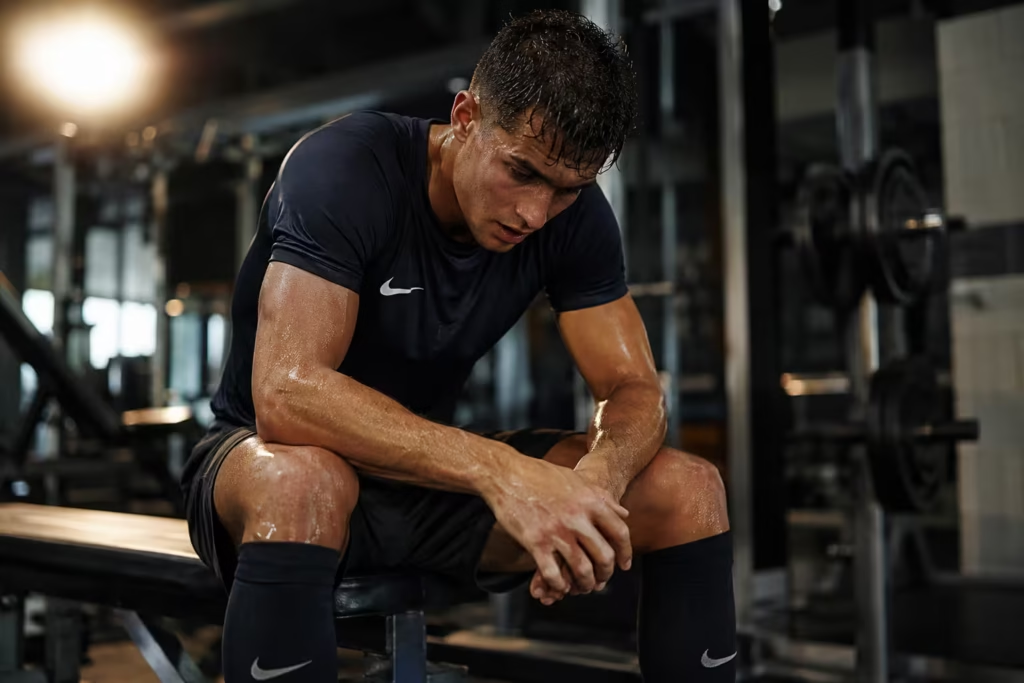
Here’s the thing nobody tells you: muscles don’t get stronger during the workout. They get stronger afterward, while you’re resting or asleep. Training is just the trigger — it creates tiny amounts of damage in your muscle fibers. Rest is when your body repairs that damage and builds it back a little stronger.
Soccer complicates this because the demands are so varied. You’re not just running for 90 minutes — you’re sprinting, decelerating hard, jumping for headers, twisting to shield the ball, sometimes taking a knock. One review of professional players put it simply: professional soccer players frequently experience fatigue due to the demanding nature of the sport. That’s the whole reason recovery deserves a real plan, not an afterthought.
The Actual Science Behind Rest and Muscle Growth in Soccer
While you sleep, your body shifts into what scientists call an anabolic state — basically “build mode.” Growth hormone goes up, cortisol (the stress hormone that breaks tissue down) drops, and your body starts prioritizing repair over everything else. Researchers studying strength athletes found that deep sleep is the highest-value recovery window for growth hormone release, inflammation control, and nervous system reset. Skip that window night after night, and you’re basically undoing your own hard work before it has a chance to pay off.
So How Much Rest Do You Actually Need?
There’s no magic number for every player, but research gives us a solid range — and the honest answer is that it depends on what you’re recovering for.
For clearing out muscle damage after a hard match, longer is better. A study following academy players through a normal training week found muscle contractile function was still down 9% a full 72 hours after a single session, meaning recovering peripheral skeletal muscle function should remain the primary target of recovery and regeneration in soccer players.
But here’s a nuance most articles on this topic get wrong: more rest isn’t automatically better when you’re prepping for your next performance. A study on young professional players tested four different gaps between a training session and a follow-up fitness test — 12, 24, 36, and 48 hours — and found that players actually performed better in sprint speed, jump height, and agility tests after just 12–24 hours of rest than after 36–48 hours. The researchers concluded that coaches should generally schedule a team’s last hard training session 12–24 hours before a match for the best sprint and jump output, rather than assuming more downtime always helps.
Put those two findings together and the picture makes sense: your muscle tissue can still be quietly repairing itself well past 48 hours, even while your nervous system and short-burst performance numbers look sharp again after just a day. Chasing a “fully recovered” feeling isn’t the same as being fully repaired — which is exactly why rest and muscle growth in soccer needs to be planned around the calendar, not just how you feel on a given morning.
In plain terms:
- Light ball work: barely any extra recovery needed
- Moderate training or gym day: about 24 hours before going hard again
- Full match or brutal interval session: your legs may feel ready in 24 hours, but budget at least 48 hours before repeating that same intensity to let deeper muscle repair finish
- Two matches in one week: sleep and food become top priority in the 24 hours after each game
How Much Sleep Should Soccer Players Actually Get?
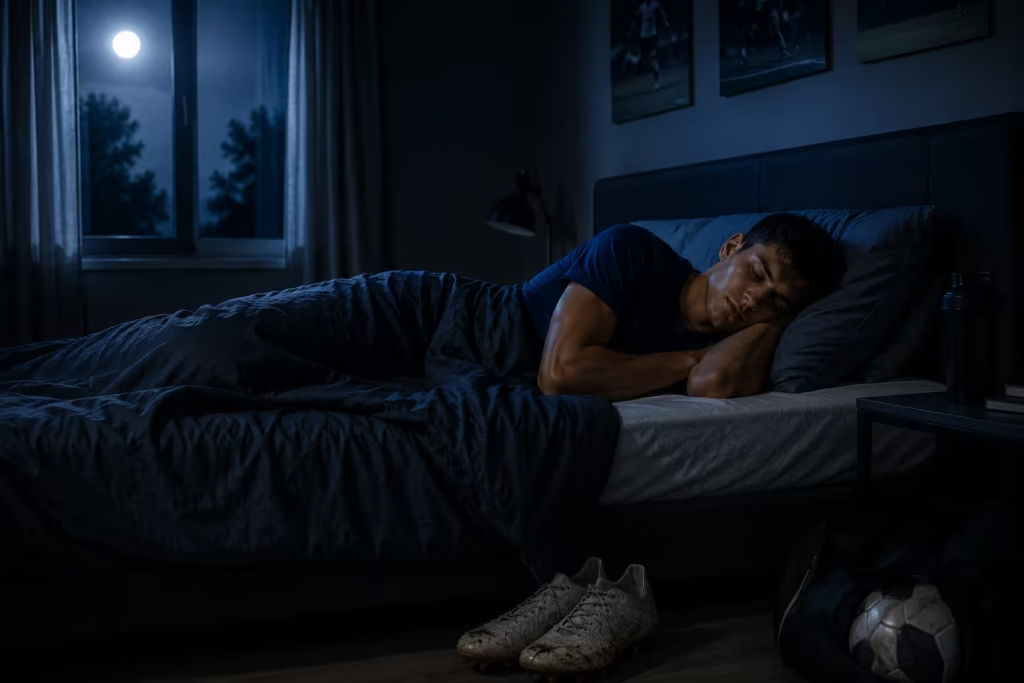
Most sports scientists point to 8–9 hours a night for competitive players — a bit more than the standard 7–9 hours for everyone else, since you’re asking your body to repair more damage. If you’re playing multiple matches a week, sleep belongs on the same priority list as your diet.
What Happens When You Skip Rest and Muscle Growth in Soccer
Skipping recovery doesn’t just leave you groggy — it works against everything you’re training for. One study tracking pro players through preseason found that greater training intensities may impair both perceptual and neuromuscular recovery, with jump height declining as fatigue piled up week after week.
What tends to happen when rest gets pushed aside too long:
- Your power drops off. Jump height, sprint speed, and acceleration all start to fade.
- Your injury risk climbs. Tired muscles don’t absorb impact well, so more force gets dumped onto tendons and joints.
- Your strength gains stall. Without proper rest, all that gym and field work stops turning into visible improvement.
- Your head gets foggy. Fatigue doesn’t just slow your legs — it slows your decision-making on the ball too.
One study on amateur players found amateur soccer players still manifest exercise-induced muscle damage symptoms and can be considered fatigued after a 48-hour recovery period. Translation: play Saturday, train hard Sunday, and you’re likely still carrying real muscle damage.
The Food Side of Rest and Muscle Growth in Soccer
Sleep sets the stage, but what you eat — and when — decides how much of that recovery window actually gets used. Most players completely ignore this part, and it’s honestly the easiest win available.
The Pre-Bed Protein Trick
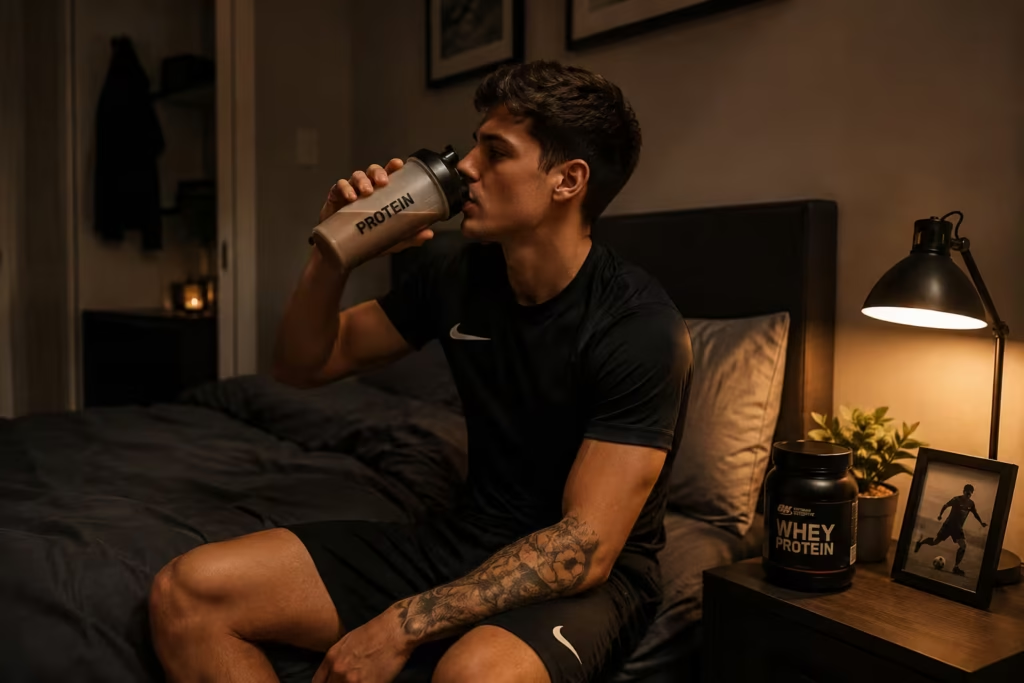
Researchers looking at protein timing found something useful: you need at least 40 grams of protein to display a robust increase in muscle protein synthesis rates throughout overnight sleep, and it works even better after training earlier that day. A scoop of casein, a bowl of Greek yogurt, or some cottage cheese before bed isn’t a bodybuilder gimmick — it’s a small habit backed by real data.
A simple checklist for recovery days:
- Eat a protein-and-carb meal within about an hour of training to start refilling energy stores.
- Have a slower-digesting protein source — dairy, cottage cheese, casein — 30 to 60 minutes before bed.
- Drink more water than you think you need; even mild dehydration slows recovery.
- Don’t skimp on carbs after hard sessions — low energy stores limit how well muscles repair.
Should You Rest Completely, or Stay a Little Active?
Not every recovery day means doing nothing. A light bike ride, easy swim, or gentle touches on the ball can help blood flow and ease soreness without adding fatigue.
Just don’t get fooled by every recovery gadget on the market. A study comparing foam rolling against static stretching in pro players came back mixed, and researchers noted that static stretching is commonly used in soccer, but its efficacy is debated. Tools like foam rollers are fine as a small extra, but they’re not a substitute for sleep, food, and real rest days.
Where Gym Work Fits Into Rest and Muscle Growth in Soccer
This is the part most articles on this topic skip entirely, and it’s a mistake — because when you lift and when you train on the field matters almost as much as whether you rest at all.
Sports scientists call it the “interference effect”: when heavy strength training and high-intensity endurance work are packed too close together, one can blunt the other’s gains. Research on young soccer players found that when strength and high-intensity aerobic sessions were combined without enough separation, sport scientists recommend practitioners provide adequate recovery when the training load is high during the pre-season, and to use concurrent training involving high-intensity aerobic and high-load strength training with caution, e.g., by separating them by a few hours or days. In plain terms: cramming a heavy leg day right before or after a hard match or sprint session can work against the very gains you’re chasing.
This doesn’t mean the gym is bad for soccer players — far from it. Other research on youth players found resistance training with and without external load was effective in improving measures of physical performance in young soccer players, with special attention to jumping ability, and importantly, found no real interference with aerobic endurance when the program was structured well. The key word is “structured” — random heavy lifting sandwiched between matches is very different from a gym plan built around your recovery windows.
A simple rule of thumb: if you played a match or ran a hard interval session in the last 24–48 hours, keep gym work light or skip it. Save your heaviest lifts for the days furthest from match day, when your nervous system and muscle fibers have had time to actually recover.
A Simple Weekly Recovery Plan You Can Actually Follow
Use this as a starting point, not a strict rulebook — adjust it around your own schedule.
| Day | What’s Happening | Recovery Focus |
| Match day | Full intensity | Protein and carbs within 60 minutes after the final whistle |
| Day after match | Active recovery only | 8–9 hours of sleep, plenty of water, easy movement |
| Two days after | Light technical work | Keep protein intake high |
| Three days after | Normal training resumes | Business as usual |
| Four days after | Hard training day | Pre-bed protein snack |
| Five days after | Light or taper session | Protect your sleep quality |
| Day before next match | Rest and prep | Carb-load, early night |
Mistakes That Quietly Ruin Rest and Muscle Growth in Soccer
- Wearing soreness like a badge of honor — it’s a sign you’re not fully recovered, not proof you worked hard enough
- Treating sleep as optional while protein and training plans stay locked in
- Forgetting hydration on travel days or after sweating buckets in the heat
- Stacking a gym session on match day without weighing your total workload
- Going purely on “vibes” instead of tracking sleep hours, soreness, and how you feel each morning
More coaches now use basic morning check-ins — a quick note on sleep, soreness, and stress — to spot fatigue before it becomes an injury. Research backs this up: wellness monitoring soccer players’ psychometric state of recovery before each training session or match allows for better detecting signs of individual fatigue, giving coaches a chance to dial back the workload before something breaks.
FAQ: Rest and Muscle Growth in Soccer
How many hours of sleep do soccer players need for muscle growth? Somewhere around 8–9 hours a night works best for most competitive players — a little more than the general recommendation, because training and matches add extra repair work for your body to handle.
How long does muscle recovery take after a soccer match? Roughly 48 hours is the number that keeps showing up in research for neuromuscular function and soreness to mostly settle down, though some muscle deficits can hang around past 72 hours depending on how intense the match was.
Can you build muscle without enough rest as a soccer player? Not really, no. Muscle protein synthesis needs sleep and time to do its job. Training through poor rest tends to stall your strength gains and raise your injury risk instead of speeding anything up.
Is active recovery better than complete rest for soccer players? Light movement — easy cycling or gentle technical work — can help with blood flow and soreness, but it works best alongside good sleep and nutrition, not as a replacement for them.
Does protein before bed help soccer players recover faster? Yes. Studies show around 40 grams of protein before sleep can noticeably boost overnight muscle repair, especially if you trained earlier that same day.
The Bottom Line
Rest and muscle growth in soccer aren’t two separate things — they’re two halves of the same process. The players who improve fastest usually aren’t doing more extra sessions than everyone else. They’re the ones whose bodies can actually absorb the training they’re already doing. Protect your sleep, respect the 48-hour window after hard efforts, and treat nutrition timing as part of the plan, not an afterthought.
For a deeper look at the sleep-duration science behind all of this, the Sleep Foundation’s guide to sleep and athletic performance is one of the most well-sourced resources available, breaking down exactly how sleep quantity and quality affect recovery, injury risk, and performance.
Keep Building Your Soccer Foundation
Recovery only works if it’s paired with smart training. These related guides round out the picture:
- What Muscles Does a Soccer Ball Sculpt?: 8 Painful Effects — see exactly which muscle groups take the damage this post talks about repairing
- How to Stop Getting Tired in Matches: 7 Soccer Stamina Training Tricks — build the endurance base that makes recovery demands more predictable
- 9 Explosive Soccer Acceleration Drills for Beginners — the power-based training that depends most on the 48-hour recovery window
- 10-Minute Soccer Practice Routine for Beginners: 7 Skills You Can Build Alone, Every Day — the training side of the equation this post’s recovery advice supports
- Is Soccer a Good Workout for Weight Loss? 7 Proven Reasons It Works — how training volume and recovery balance affects body composition goals
- How to Track Soccer Performance at Home: 7 Proven Ways (Without Equipment) — simple ways to monitor fatigue and readiness without expensive gear
- The No-Nonsense Guide to Playing Better Soccer Skills and Performance Improvement — the hub guide tying training, recovery, and skill work together
- Does a Gym Make You Slower in Soccer? Here’s What the Research Says — how to balance strength training against the recovery demands covered here
- How to Get Recruited for College Soccer with No Experience Quickly — for players building the long-term training and recovery habits that scouts notice
- Best Soccer Camps in America: A Helpful Simple 2026 Guide — camps where structured training and recovery routines matter most

