

How to Become a Soccer Referee for Beginners in 2026?
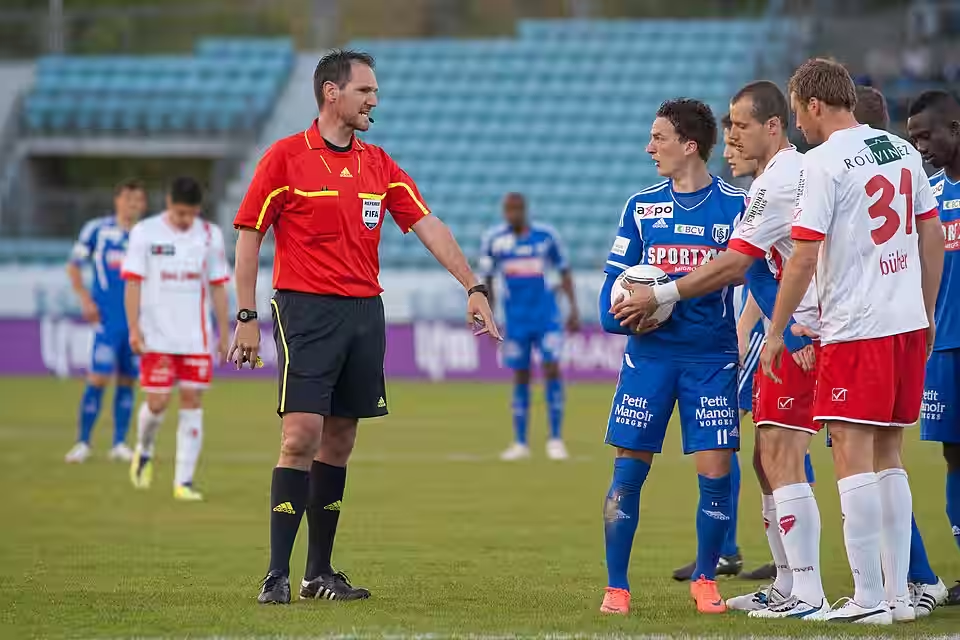
It’s a lot more accessible than most people assume. Becoming a certified referee comes down to a short course through your country’s governing body, usually some online learning followed by an in-person or face-to-face training day. In the USA, that’s the US Soccer Grassroots Referee course. In England, it’s the FA Referee Course, run through your local County FA. Sign up, get through the modules, show up to the practical session, and you can realistically be working your first match within a few weeks.
Here’s the part that surprises people: you don’t need to have played at a high level, and you definitely don’t need to walk in fit enough for a marathon. What actually matters is knowing the Laws of the Game reasonably well, being able to make a call and stick with it under pressure, and having thick enough skin to hold your ground when a coach is shouting at you from the sideline. Positioning, signals, match management, all of that gets built through the course itself and, honestly, through your first handful of games where you’ll inevitably get a few things wrong.
This guide walks through what the certification actually involves, roughly what it costs, what the course teaches, and what your first few weeks on the touchline are likely to feel like.
Table of Contents
What You Need Before You Start
Minimum Age Requirements
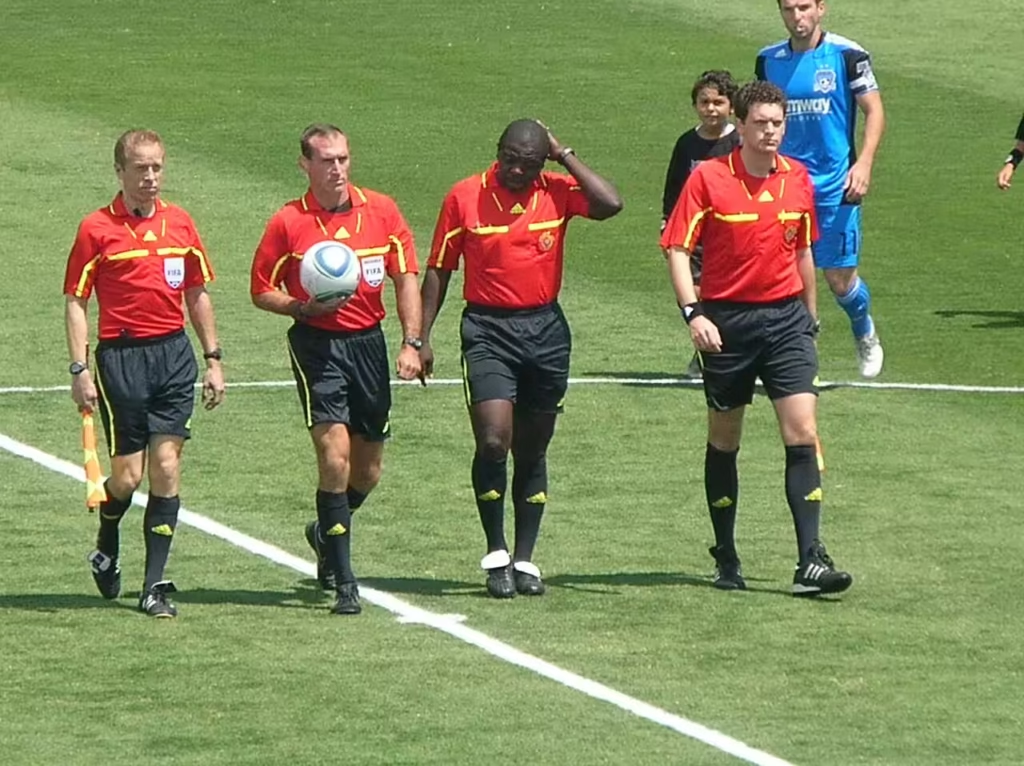
This varies by country and even by local association, so treat it as a general ballpark rather than gospel. In the USA, US Soccer’s Grassroots pathway usually opens up around 13 to 14, though it depends on your state referee committee. In England, the FA Referee Course technically accepts anyone 14 and over, but plenty of County FAs would rather you be 16 before booking the practical session. Neither country puts a cap on the other end, either. It’s not unusual to see someone start refereeing in their thirties or forties, often once their own playing days have wound down and they still want a reason to be on the pitch every weekend.
Fitness and Commitment Expectations
There’s typically no fitness test standing between you and your certificate at the grassroots level, which is a relief for a lot of beginners. But don’t let that fool you into thinking it’s easy on the body. Covering a full pitch for 60 to 90 minutes is genuinely tiring, so it’s worth building up some conditioning before your first game rather than discovering your fitness gap in real time, in front of two teams, in the 70th minute.
Step-by-Step: How to Get Certified
Step 1: Pick Your Governing Body’s Course
If you’re in the USA, that’s the US Soccer Grassroots Referee course, and you’ll register through the US Soccer Learning Center. If you’re in England, look for the FA Referee Course through your local County FA. Different names, same basic purpose: both end with a badge or registration number that lets you officiate youth and grassroots matches.
Step 2: Complete the Online Learning Modules
Both pathways kick off with online coursework, the Laws of the Game, safeguarding basics, match procedure, usually adding up to a few hours of self-paced learning. You’ll need to finish this before you’re allowed into the in-person session, so give yourself a few days rather than trying to blitz it the night before.
Step 3: Attend the In-Person or Face-to-Face Training
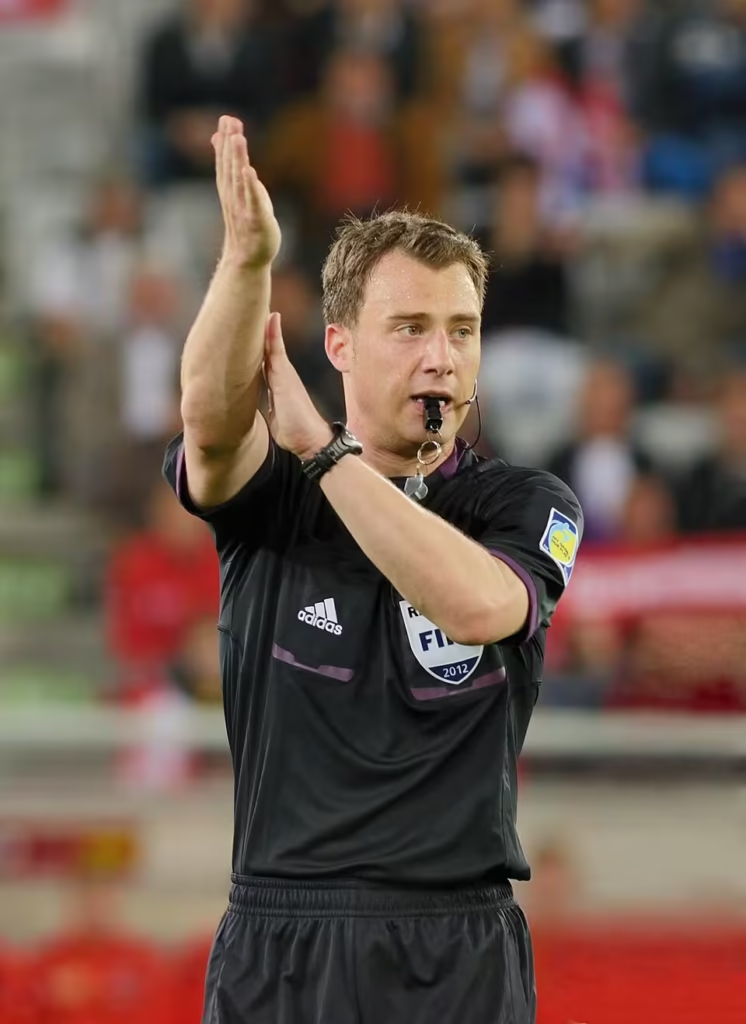
This is honestly where the course starts to feel real. You’ll work through match scenarios, practice your signals, and get feedback from someone who’s actually done the job for years. In the US, that’s often a local field session; in England, it tends to be a mix of classroom discussion and practical work out on a pitch.
Step 4: Complete Safeguarding and Background Check Requirements
If you’re 18 or older, plan on a background check, SafeSport screening in the US, a DBS check in England. It’s not optional, no matter how much soccer experience you’re bringing to the table, and for good reason: a lot of your early games will involve kids.
Step 5: Register and Start Getting Assigned Games
Passing the course doesn’t automatically put you on a pitch. You still need to join a local referee association or register with your County FA, since that’s how assignors actually know you exist and start sending you games. Most regions run this through an online platform where you set your availability and pick up matches as they come in.
What the Course Actually Covers
Don’t expect a lot of pure memorization. The course leans hard into practical application: where to stand, when to blow the whistle versus when to let play run on, how the signals actually work, and how to manage players and coaches without losing your grip on the match.
One of the harder instincts to build early is knowing when to stop play and when to wave it on. It sounds simple until you’re the one standing there with the whistle. If you want a head start on that before your first match, our guide on what advantage means in soccer referee calls breaks down exactly how referees are trained to make that call in real time.
Gear You’ll Need for Your First Match
Referee kit doesn’t need to be expensive to start out. You’re looking at a black referee shirt (or the away color, if black clashes with both teams), black shorts and socks, a whistle, a set of yellow and red cards, a notebook and pen for bookings and subs, and a watch to actually track time. A lot of certification courses throw in a basic kit as part of the fee, so check what you’re already getting before you go buy your own.
Tips for Your First Few Games (and Mistakes to Avoid)
Take the smaller, lower-stakes games first if you get any say in it. Younger age groups and recreational leagues will forgive your early mistakes in a way a competitive adult match won’t. Talk to players constantly, in a calm, clear voice, instead of going silent until you need the whistle. Players generally respond a lot better to a referee who briefly explains a call than one who just points and says nothing.
Almost every new referee makes the same handful of mistakes at first. They over-officiate, whistling every bit of harmless contact instead of letting the game breathe. They stand in the wrong spot, either crowding the play or watching it from too far away. And they chase 50-50 calls trying to prove they’re paying attention, when staying consistent matters a lot more than nailing every single decision. None of this sticks around for long. Most referees will tell you their sixth game felt completely different from their first.
How Much Do Beginner Referees Get Paid
There’s no single number here, match fees swing a lot depending on your region, the age group, and the level of competition. Grassroots and youth matches tend to pay a modest fee per game. It’s not going to replace a job at the beginner stage, but it’s a genuinely decent way to make some extra money while staying close to the sport.
Frequently Asked Questions
How do I become a soccer referee as a beginner?
Sign up for your governing body’s entry-level course, US Soccer’s Grassroots course in the USA or the FA Referee Course in England, work through the online modules and in-person training, pass any required background checks, and register with a local referee association so you can start getting assigned games.
What is the minimum age to become a soccer referee?
It depends on where you live, but most entry-level courses accept applicants from around 13 to 14 years old, and there’s generally no upper age limit.
How long does it take to become a certified soccer referee?
Most beginners can get certified within a few weeks, combining a few hours of online coursework with one in-person training session.
Do I need playing experience to become a referee?
Not really. It can help you read the game a bit faster, but it isn’t a requirement. The certification course is built to teach you everything from scratch.
What equipment do I need to start refereeing?
A referee shirt, shorts, socks, a whistle, yellow and red cards, a notebook, and a watch. Basic kit is often included in the course fee, so check before you buy anything.
Is refereeing soccer a good way to earn extra money?
It can be, especially at the youth and grassroots level where demand for referees is consistently high. Just don’t expect it to be a full-time income while you’re still finding your feet.