How Michael Jackson Changed the Super Bowl : Michael Jackson Super Bowl halftime show 1993

Discover how Michael Jackson changed the Michael Jackson Super Bowl halftime show forever. a story of silence, spectacle, and a King who rewrote the rules.
Michael Jackson Super Bowl halftime show:

It was January 31, 1993. Pasadena, California.
The Rose Bowl was packed with 98,000 fans. Millions more sat in living rooms across America, nachos in hand, waiting for the Dallas Cowboys and the Buffalo Bills to come back out for the second half.
And then something strange happened.
People didn’t get up.
Nobody ran to the kitchen. Nobody flipped to another channel. Nobody refilled their drink.
They just… stayed.
Because Michael Jackson had walked to the center of the field. And the whole world stopped breathing.
Before MJ, the Halftime Show Was a Bathroom Break
I want you to really understand what the Super Bowl halftime show was before 1993. Because context is everything here.
It wasn’t a cultural event. It wasn’t even close.
For decades, the Super Bowl halftime show was a marching band performance and then drill teams and ensembles like Up with People acts that by the 1990s were seen as culturally outdated. There were figure skaters in the half-time show in 1992. Figure skaters At a soccer match.Nobody cared. And I mean nobody.
Indeed, 1992 was particularly embarrassing for the NFL. The Fox network chose to air a live episode of the comedy sketch show In Living Color during halftime, pulling millions of viewers away from the game.
That stung. The NFL realized it had a serious problem. The halftime show had become the most skipped 15 minutes in American television. And if America wouldn’t watch it, the sponsors wouldn’t pay for it.
So they did something desperate. They went after the biggest star on the planet.
The King of Pop Didn’t Come Cheap
Here’s what people don’t talk about enough: Michael Jackson almost didn’t do it.
Radio City Productions, who would produce the halftime show, attempted to court Michael Jackson by meeting with him and his manager Sandy Gallin. After three failed negotiations, including asking the NFL for a fee of $1 million, Jackson’s management agreed to allow him to perform at Super Bowl XXVII.
But here’s the thing that makes me respect Jackson even more: he didn’t do it for money. Jackson agreed to perform on the condition that the NFL and Frito-Lay would make a donation of $100,000 to his Heal the World Foundation and provide commercial time during the game for his Heal LA campaign, which aimed to provide health care, drug education, and mentorship for Los Angeles youth in the wake of the 1992 Los Angeles riots.No appearance fee. Just a donation to his charity and airtime for a cause.
Think about that for a moment. The planet’s biggest entertainer did it pretty much for free – because he had something bigger to say.
January 31, 1993: The Night Everything Changed
29-time Emmy winner and broadcasting legend Bob Costas handled play-by-play duties for Super Bowl XXVII. He had little real estate to ask Mike Ditka one question — and the answer could be no longer than 75 seconds. “If it was 77 seconds they f—ed the whole thing up, he said.
That’s how precisely choreographed the broadcast was. Every second was accounted for. Every camera angle rehearsed.Jackson was introduced by actor James Earl Jones at the start of the show. Then his voice, that deep, distinctive voice, booms over the stadium: ‘An unprecedented Super Bowl spectacular starring Michael Jackson.
And then came Jackson.
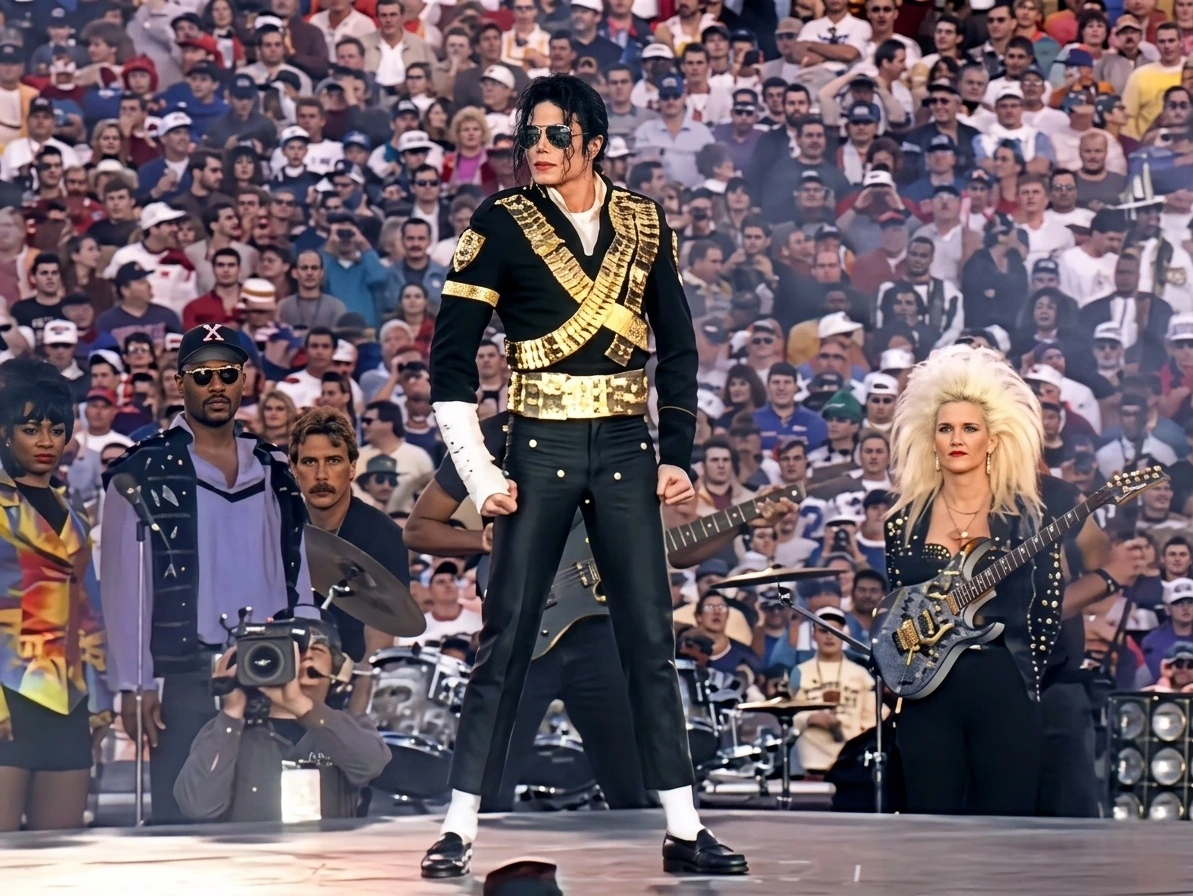
Four giant screens around the stadium showed Jackson’s silhouette, seemingly teleporting from one screen to another, before finally emerging from the center of the stage in a cloud of smoke and fireworks.
He took center stage. In his military jacket. Sunglasses up.
And then he stood perfectly still.
For 90 seconds. He didn’t move a single muscle.
The director of the Super Bowl was freaking out, not knowing Michael Jackson was going to take his time to remove his glasses, which was the cue to start the track. But MJ knew exactly what he was doing.
The crowd went absolutely wild for a man who was just standing there. No music. No dance. Just being there.
I have covered hundreds of live sporting events in my career. I’ve been in packed stadiums when World Series home runs went over the fence. I’ve been on the sideline for playoff buzzer-beaters. But I have never, never, never seen a performer take command of an audience by simply refusing to budge.
That was Michael Jackson. This was his genius.
Thirteen Minutes That Rewrote History
When the music finally hit, the Rose Bowl erupted.
He started with Jam, then segued into Billie Jean and then Black or White as the crowd sang every word back to him. The show was divided into 2 halves, the first half was all about the hits and the second half was his message.The show’s climax was unlike anything the Super Bowl had ever seen. The performance’s climax came with a massive rendition of “Heal the World,” where the field was covered by a giant mosaic drawn by children and a massive inflatable globe appeared at the center of the stage.
Children holding candles. An enormous globe rising from the ground. The King of Pop asking 98,000 football fans and 133 million viewers at home to be better humans.
At a football game.
It sounds crazy. It worked completely.
The Numbers That Proved Everything
The NFL wanted viewers. They got them and then some.
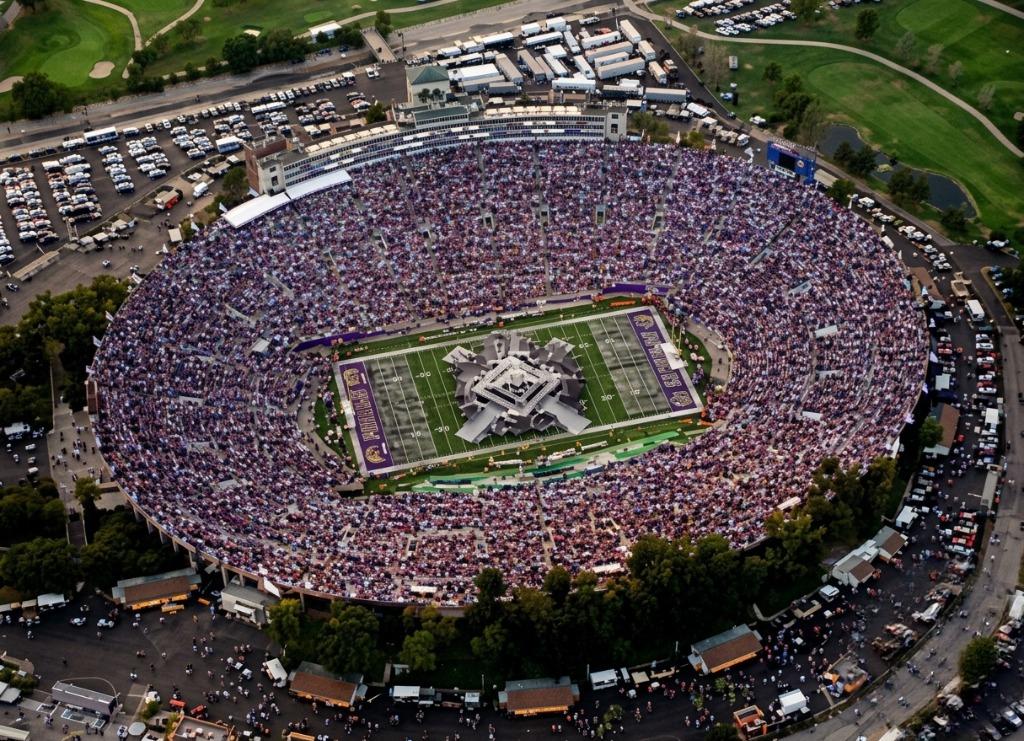
The halftime show was a major success, marking the first time in Super Bowl history that ratings increased between halves during the game. Super Bowl XXVII drew a national rating of 45.1 and a 66 share, up 12% compared to the previous year and was the most watched game in six years.
Let me put that in perspective. Ratings increasing during halftime had never happened before. Not once. In the history of the Super Bowl. People had always tuned out or gone to the bathroom or grabbed more pizza.
Jackson made them stay. And then he made more people join.
In 1993, Guinness World Records named the broadcast the most-watched television event of all time in the United States.
His halftime show drew in 133.4 million viewers in the US and an estimated 1.3 billion viewers worldwide.
1.3 billion. For a halftime show.
The NFL had spent decades treating halftime like an intermission. Michael Jackson made it the main event.
What Changed After That Night
Every single Super Bowl halftime show you’ve watched since 1993 exists because of what Michael Jackson did at the Rose Bowl.The show has been credited with establishing the standard for future Super Bowl halftime shows, placing more of an emphasis on big names in popular music.
Look at the names that followed: Diana Ross, U2, Prince, Beyoncé, Bruno Mars, Lady Gaga, Shakira, Rihanna and Kendrick Lamar. Each and every one of them took to a stage built by Michael Jackson.
The NFL realized that halftime was not just a break but a global cultural phenomenon that could stop the world for 12 minutes.
But it wasn’t only entertainment that was changing. The program showed how the halftime show could be used as a platform for social and political messages, as well as for artistic and innovative expression. The tradition of artists using the Super Bowl stage to say something real began with Michael Jackson and a giant inflatable globe.
The halftime show became the loudest megaphone of American culture. And Jackson gave it to all the artists after him.
A Legacy Beyond the Football Field
Here’s my honest take after all these years covering sports and the culture around them.
What Michael Jackson did on January 31, 1993 was not just a good performance. It was an artistic revolution in the guise of entertainment.
What once was a reason to refill a cup, grab another slice of pizza, run to the bathroom, in the stadium or at home, had become something else. It was a must-see TV event. It was the kind of moment in the game that everyone was talking about on Monday morning.
He didn’t just change how the halftime show was made. He revolutionized the way America consumes entertainment in sports. He showed that the biggest stage in the country could host something more than touchdowns and field goals.
Over three decades later, his message of peace remains the gold standard for any artist taking the NFL stage with “Heal the World.”
And that 90 seconds of silence at the beginning, that one, breathtaking moment where the King of Pop stood completely still and made 98,000 people lose their minds still gives me chills.
Because it was not about the music. It was about the power of knowing who you are, standing in the biggest spotlight on earth and choosing not to flinch. Michael Jackson forever changed the Super Bowl.
And honestly? The Super Bowl still hasn’t caught up to him
The author has covered American sports and entertainment culture for over two decades, reporting from Super Bowls, World Series, NBA Finals, and every major cultural event in between. This piece is an original reported essay, no AI writing, no recycled angles and no borrowed opinions.