
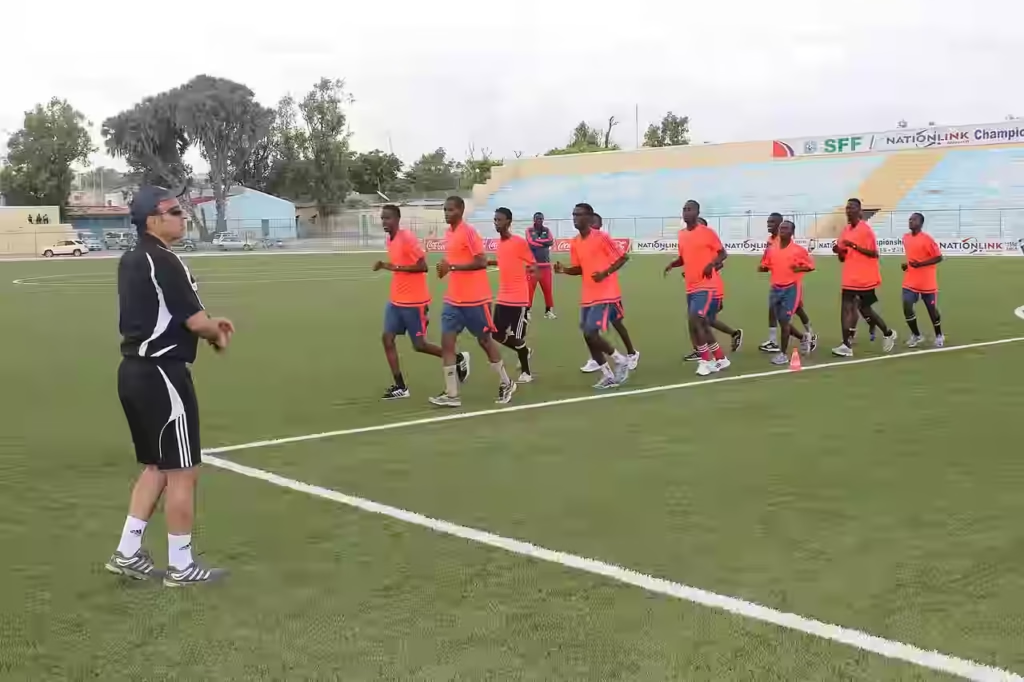

A soccer referee fitness test is really two separate things wearing one name. Before the season starts, referees have to pass a standardized physical test, currently a Repeated Sprint Ability test and an Interval Test set by FIFA, just to be eligible to officiate at their level. Then, once the season is underway, GPS-based tracking measures actual match workload in real time, distance covered, speed zones, sprint counts, the same kind of data professional players generate.
One test qualifies you for the job. The other tells you, and your assessors, how the job is actually going once you’re out there doing it. They’re related, but they’re not the same thing, and mixing them up is where a lot of confusion online comes from.
Part One of the Soccer Referee Fitness Test: The Official FIFA Standards

Referees currently sit two official tests, and both have to be passed at least once a year to maintain eligibility. This is the part most people mean when they say “soccer referee fitness test,” the pass/fail gate that determines whether someone is even allowed on the pitch that season.
Test 1: Repeated Sprint Ability (RSA)
This test has referees run six consecutive 40-meter sprints, walking back to the start line for recovery between each one. The standard sprint time referees are held to is 6.40 seconds. If a referee fails one of the six trials, they get a seventh attempt immediately after. Fail two out of seven, and the test is failed outright. It’s a genuinely demanding measure of pure anaerobic speed, and it’s usually the part of the soccer referee fitness test that trips people up first.
Test 2: The Interval Test
The second test is built around repeated 75-meter runs paired with 25-meter recovery walks, 40 intervals in total, which works out to roughly 10 laps of a standard 400-meter track. Pace standards vary slightly by referee category, but a typical target is around 17 seconds per 75-meter run. This test is meant to mirror the stop-start, high-intensity nature of actually officiating a match far more closely than a single timed sprint ever could.
The Yo-Yo Test: An Optional Aerobic Add-On
FIFA also permits the Yo-Yo Intermittent Recovery Test, Level 1, as an additional aerobic fitness check alongside the two official tests that make up the core soccer referee fitness test. It works through progressively faster 20-meter shuttle runs with short active recovery, continuing until the referee can no longer keep pace with the audio cue. Reference standards differ by category, international and category 1 referees are generally expected to reach around level 18-2, roughly 1,800 meters, while lower categories have somewhat lower benchmarks. It’s optional rather than mandatory, but plenty of referee bodies use it anyway since it captures aerobic capacity in a way the RSA and Interval tests don’t fully cover on their own.
Why FIFA Moved Away from Older Fitness Tests
It’s worth knowing that the soccer referee fitness test hasn’t always looked like this. Earlier eras relied on simpler tests like the 12-minute Cooper test and basic 50-meter and 200-meter sprint checks. Peer-reviewed research on referee fitness assessment found those older tests had poor validity for actually predicting match-related physical capacity, which is exactly why FIFA phased them out in favor of the current RSA and Interval Test combination, and why the Yo-Yo test was later added as a scientifically stronger option for aerobic assessment specifically.
Part Two After the Soccer Referee Fitness Test: Match Workload on GPS

The fitness test tells you whether a referee is physically qualified, following the official protocol US Soccer publishes for FIFA-standard testing. It doesn’t tell you what actually happened during Saturday’s match. That’s where GPS tracking comes in, and it’s a completely separate measurement system layered on top of the fitness standard. Referees wearing GPS units generate the same kind of data outfield players do: total distance, time spent in each speed zone, number of sprints, and overall physical intensity across the full 90 minutes plus stoppage time. Our guide on how referees track distance in soccer covers this side of things in more depth, including how far officials actually cover on an average matchday.
This kind of in-match data connects directly to how professional clubs approach player fitness too. If you want the player-side version of the same technology, how soccer teams use GPS tracking breaks down how coaching and medical staff apply nearly identical data to training load and injury prevention.
Test Standards by Referee Category
Here’s the soccer referee fitness test broken into its component parts, side by side with the ongoing GPS workload tracking that runs alongside it.
| Test | Standard | Applies To |
|---|---|---|
| Repeated Sprint Ability | 6 x 40m, target 6.40 seconds per sprint | All FIFA-listed referees, annually |
| Interval Test | 40 x 75m run / 25m walk, roughly 17 sec/75m | All FIFA-listed referees, annually |
| Yo-Yo IR1 (optional) | Level 18-2 for international/category 1 | Used alongside official tests for aerobic capacity |
| Match GPS tracking | Ongoing, every match | Elite competitions with EPTS access |
How Often Are Referees Actually Tested?
The official soccer referee fitness test generally happens once, at the start of the competitive season, and it’s what determines eligibility for that year. It’s rarely repeated mid-season, partly because coordinating official assessments around an active match schedule is genuinely difficult, and partly because the tests themselves are physically demanding enough that repeating them constantly isn’t practical. Match-day GPS tracking, by contrast, happens continuously, every match generates fresh data, which is why the two systems complement each other rather than duplicating the same information.
How Referees Train for the Soccer Referee Fitness Test

Preparing for the RSA and Interval Test isn’t fundamentally different from training any other repeated-sprint sport. A mix of genuine sprint work, structured interval sessions that mimic the 75m/25m pattern, and a solid aerobic base built through steady-state running all factor in. Referees who are also managing a demanding training and match schedule should pay close attention to recovery between sessions. Our guides on recovering from overtraining in football and why rest and muscle growth matter as much as extra training apply just as directly to referees preparing for a fitness assessment as they do to players. Referees working multiple matches across a tournament weekend should also take hydration strategy for multi-game tournaments seriously, since dehydration affects sprint performance and recovery just as much for officials as it does for players.
For anyone earlier in the process, our guide on how to become a soccer referee for beginners covers what the certification pathway looks like before fitness testing even becomes part of the conversation, and if you’re shopping for the right gear to train in, our roundup of the best GPS trackers for soccer referees is worth a look before your next assessment.
Frequently Asked Questions
How is a soccer referee fitness test conducted? A soccer referee fitness test is conducted through two official FIFA tests taken at least once a year, a Repeated Sprint Ability test covering six 40-meter sprints, and an Interval Test built around 40 repetitions of a 75-meter run and 25-meter walk. The Yo-Yo Intermittent Recovery Test is also used as an optional aerobic add-on.
What is the FIFA referee fitness test? It’s a two-part annual assessment: the Repeated Sprint Ability test measures anaerobic sprint speed over six 40-meter efforts, and the Interval Test measures repeated high-intensity running across 40 rounds of a 75-meter run paired with a 25-meter recovery walk.
How is referee match workload tracked? Match workload is tracked separately from fitness testing, usually through GPS-based tracking systems worn during actual matches, recording total distance, speed zones, and sprint counts throughout the game.
How often do referees take the fitness test? Referees must pass the official fitness test at least once a year, typically at the start of the competitive season. It’s rarely repeated mid-season due to scheduling and the physical demands of the test itself.
Do referees still take the Cooper test? No, not as an official standard. FIFA moved away from the Cooper test and older sprint checks after research found they had poor validity for predicting actual match-related fitness, replacing them with the current Repeated Sprint Ability and Interval Test combination.
How far do referees run in an average match? Research generally puts the figure between 9 and 13 kilometers per match, which is why match workload tracking through GPS has become a standard companion to the annual fitness test rather than a replacement for it.


