
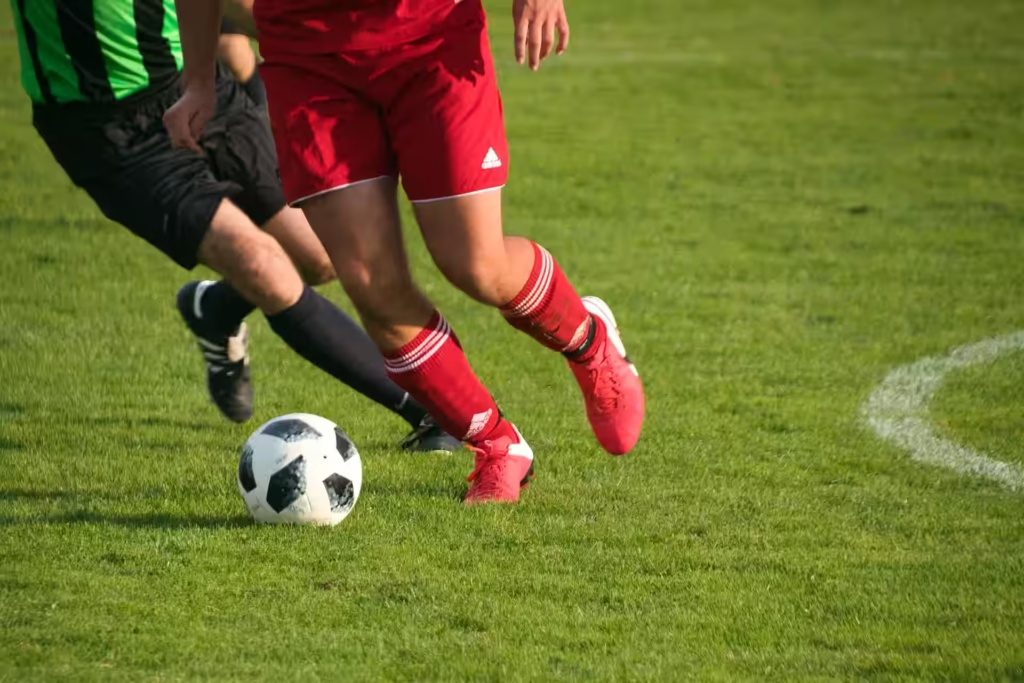

If you’re wondering how to fix poor dribbling in soccer, the honest answer is that most problems come down to three things: keeping your head up, using the right part of your foot, and touching the ball more often than you think you need to. None of that requires natural talent—it requires the right drills, repeated in order, for a few weeks straight.
Dribbling is something that you can really work on and get better at. It is not like being tall or being super fast because those things you are just born with. Being good at keeping the ball close to your feet is something you can learn by practicing over and over. If you are playing in a Sunday league in Manchester or a rec league in Ohio or a youth academy in Germany and you are having trouble keeping the ball close it is probably because you are making a simple mistakes.
These mistakes are easy to fix if you practice in the way. This guide will tell you why you might be feeling a little clumsy with the ball now and it will give you some quick things you can try this week to get better. It will also show you some drills you can do in your backyard or driveway or even just an empty patch of grass with a ball and a few cones. If you want to learn more, about soccer and how to play better you can check out our guide to playing better soccer but for now let us focus on dribbling.
Table of Contents
Quick Answer: How to Fix Poor Dribbling in Soccer
Most dribbling problems come down to three fixable habits:
- Watching the ball, not the field → Practice looking up every 2–3 touches
- Using the wrong part of your foot → Rebuild control with inside- and outside-foot touches
- Touches that are too big → Shrink your practice space to force tight control
Fix these three things in order, and your touch improves within a few weeks of consistent practice—not overnight.
Why You Have Poor Dribbling in Soccer Right Now
Before fixing anything, it helps to know what’s actually going wrong. Poor dribbling almost always traces back to one or more of these habits, the same fundamentals The FA highlights.
You’re Watching the Ball Instead of the Field
New players glue their eyes to the ball because it feels safer. The problem is that soccer is played with your head up — you need to see defenders, teammates, and space. Watching the ball constantly also tends to make your touches heavier, since you’re reacting to the ball rather than controlling it with feel.
You’re Using the Wrong Part of Your Foot
Many beginners push the ball with their toe, which is hard to control and easy for a defender to poke away. Better dribblers use the inside, outside, and sole of the foot depending on the situation, which keeps the ball glued closer to the body.
Your Touches Are Too Big
If the ball rolls a full stride or more away from you with every touch, a defender only needs one step to close the gap. Tight dribbling means small, frequent touches — especially in tight spaces near goal or along the touchline.
You Don’t Change Pace or Direction
Predictable dribbling is easy to defend. Players who struggle often move at one constant speed in one direction, which lets a defender simply match their stride instead of getting beaten.
How to Fix Poor Dribbling in Soccer: Fixes That Actually Work

Once you know the cause, the fixes are straightforward — and they line up with the FA’s own tips for dribbling in football. Pair them with a 10-minute daily practice routine so they stick.
Fix 1: Practice With Your Head Up, Deliberately
Start every dribbling session by forcing yourself to look up every two or three touches. It will feel wrong at first because your touch will get slightly worse before it gets better — that’s a normal part of the process, not a sign you’re doing it incorrectly.
Fix 2: Rebuild Your Touch With the Inside and Outside of the Foot
Spend ten minutes tapping the ball back and forth between the inside of one foot and the inside of the other, standing in place. Then progress to walking, then jogging, while keeping the same light touch. This retrains the foot to control the ball rather than kick it.
Fix 3: Shrink Your Space on Purpose
Set up a small square of cones — about the size of a parking space — and dribble inside it without letting the ball touch the cones. This forces small, controlled touches because there’s simply no room for big ones.
Fix 4: Add a Change of Direction Every Few Touches
Once basic control feels comfortable, practice sharp direction changes using the sole of your foot to drag the ball back, or the outside of your foot to push it sideways. This is what actually beats a defender, not just moving forward quickly — and it draws on the same explosiveness covered in our soccer acceleration drills for beginners.
Best Drills to Fix Poor Dribbling in Soccer
Consistency matters more than variety here. The table below compares four widely used drills so you can pick what fits your space and time — or explore our soccer training tools roundup for options beyond cones.
| Drill | Space Needed | Time | Focus | Best For |
| Cone weave | 5–8 cones in a line | 5–10 min | Close control, both feet | Beginners rebuilding touch |
| Box dribbling | One small square (cones) | 5–10 min | Tight-space control | Players who take big touches |
| Figure-8 dribble | Two cones, open area | 5 min | Change of direction | Beating defenders 1v1 |
| Wall touches | Any flat wall | 5–10 min | Quick reaction, first touch | Players lacking confidence under pressure |
A realistic routine is 15–20 minutes, three to four times a week, combining one control drill (cone weave or box dribbling) with one direction-change drill (figure-8). Adding a ball to daily routines — even five minutes while watching TV — builds the “feel” that separates comfortable dribblers from hesitant ones.
Common Soccer Dribbling Mistakes That Keep You Stuck
Even players doing the right drills can stall out by repeating a few habits — including some that Coaching American Soccer’s breakdown of dribbling fundamentals flags as the most common at the youth and adult recreational level:
- Practicing only at full speed. Slow, controlled reps build technique faster than rushing.
- Only using the strong foot. A one-footed dribbler is easy to defend once opponents figure out which way you’ll go.
- Skipping game-speed pressure. Cone drills build touch, but small-sided games (1v1 or 2v2) teach dribbling under real defensive pressure.
- Ignoring body shape. Leaning away from a defender and shielding with your body matters as much as foot skill in tight spaces.
How Long It Takes to Fix Poor Dribbling in Soccer
Most players notice a real difference in touch and confidence within two to four weeks of consistent practice—roughly 10 to 15 focused sessions. Full comfort dribbling under match pressure typically takes longer, often a full season, since game situations add speed, fatigue, and decision-making that cone drills alone can’t fully replicate. Control tends to fade late in games regardless of skill level—working on match stamina pays off almost as much as technique. Patience matters: skills like this improve in small, steady increments, not overnight jumps.
Frequently Asked Questions
Why is my dribbling so bad in soccer? Poor dribbling usually comes from watching the ball instead of the field, taking touches that are too big, or relying only on your toe or strong foot. These are technical habits, not a lack of talent, and they improve quickly with focused touch drills.
How can I improve my dribbling skills fast? Practice short, controlled touches using both feet in a small space, then add head-up awareness and direction changes. 15–20 minutes, three to four times a week, produces noticeable improvement within a few weeks.
What is the best way to practice dribbling alone? Cone weaves, box dribbling, and wall touches are effective solo drills. They need no partner and let you focus on touch before adding game pressure.
Do I need cones to practice dribbling? No. Shoes, water bottles, or small household objects work as markers. What matters is a tight space that forces small, controlled touches.
How often should I practice dribbling to see results? Three to four short sessions per week beats one long session, since ball control is built through frequent repetition.
Can adults improve their dribbling, or is it too late? Dribbling technique improves at any age. Adult and recreational players often see fast gains because they apply focused, deliberate practice more consistently than younger players training less structured.
Why do I lose the ball every time a defender comes near me? Usually your touches are too big under pressure, or you’re not shielding the ball with your body. Tighter touches and using your body to block a defender’s access both help.
Should I focus on my weak foot or strong foot first? Keep building your strong foot, but dedicate specific time to your weak foot early. Waiting too long makes you predictable and easier to defend as you advance.


