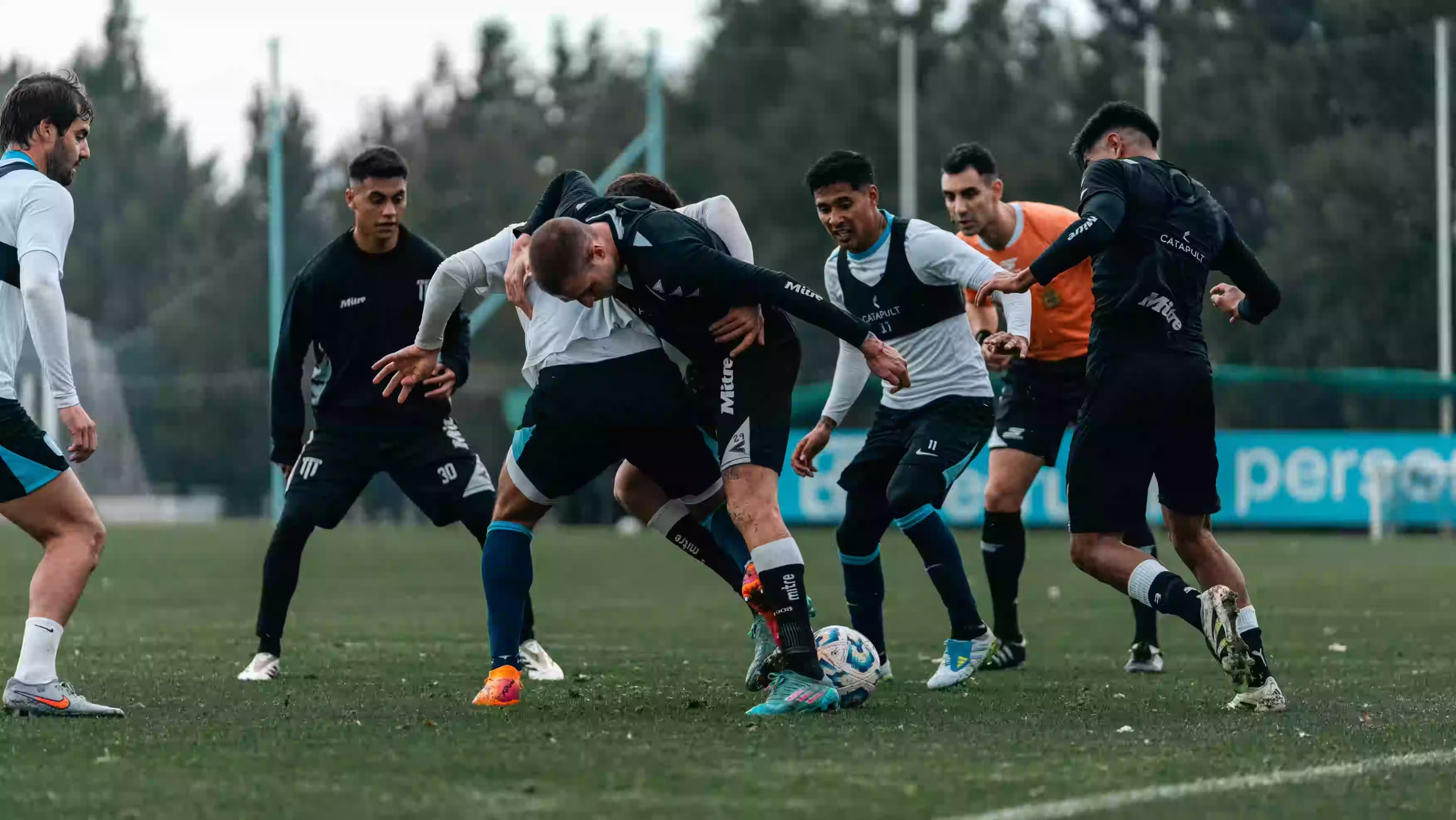

So, how do soccer teams use GPS tracking, really? Walk into almost any professional training ground and you’ll see it: nearly every player wears a small tracking pod tucked between their shoulder blades, and that little device feeds the fitness staff a constant stream of data on distance, speed, acceleration, and workload, all before the session even ends. Coaches lean on that data to manage fatigue, cut injury risk, fine-tune how hard a session should actually be, and make substitution calls that used to come down to a gut feeling on the touchline.
It’s not a gimmick, and it hasn’t been for a while now. GPS-based Electronic Performance and Tracking Systems, EPTS for short, are standard kit at most professional clubs these days, especially since FIFA formally cleared the technology for use during competitive matches. And honestly, the uses have grown well past simply logging how far someone ran.
This guide breaks down what these systems actually track, how coaching and medical staff use the numbers day to day, and where the technology still comes up short.
Show Image A GPS tracking pod worn between the shoulder blades during a training session.
Table of Contents
What a GPS Vest Actually Measures
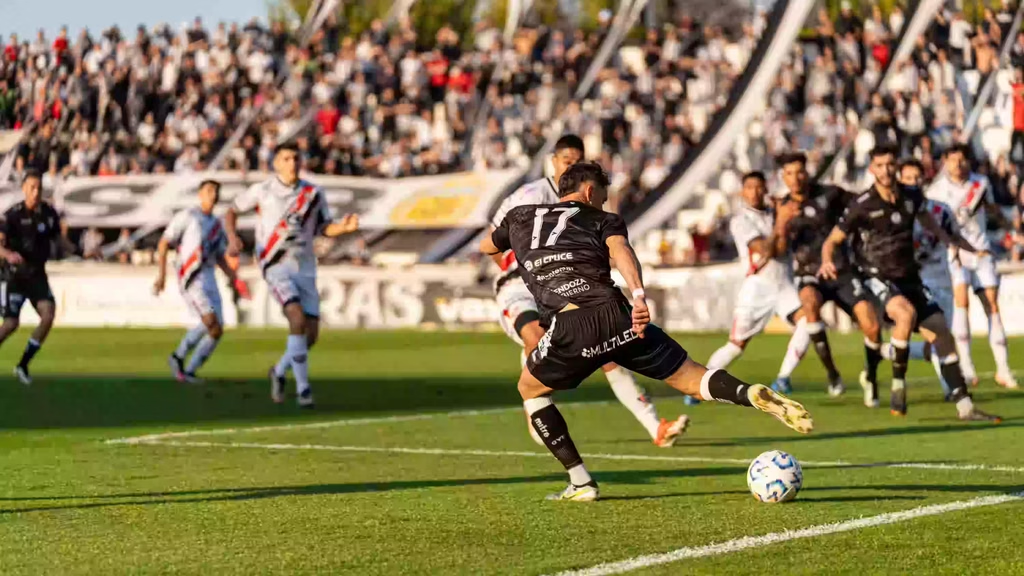
A typical unit combines a GPS chip with an accelerometer, a gyroscope, and sometimes a heart rate strap, all packed into a pod that sits snugly between the shoulder blades under a compression vest. It looks almost too small to matter, but together those sensors record several distinct categories of data throughout a session. This raw feed is really the foundation for the question at the heart of this whole guide, how do soccer teams use GPS tracking, since everything downstream, the training load charts, the injury flags, the substitution calls, builds on this same raw data.
Distance and Speed Zones
The most basic output is total distance covered, but the more useful version breaks that distance into speed zones, walking, jogging, running, high-speed running, and sprinting. A player who covers the same total distance as a teammate but spends far more of it sprinting is working at a meaningfully higher intensity, and that distinction matters for both performance and fatigue management.
Player Load
Player load is a composite metric built from the accelerometer data, capturing the cumulative stress of every acceleration, deceleration, jump, and change of direction, not just straight-line running. Two players can cover identical distances and still carry very different physical loads depending on how much starting, stopping, and cutting each one did.
Heart Rate and Physiological Data
Some systems pair GPS with a heart rate monitor to gauge physiological effort alongside physical output, which helps staff separate players who are working hard from players who are simply moving a lot without much cardiovascular strain behind it.
How Do Soccer Teams Use GPS Tracking for Injury Prevention?
This is honestly where GPS tracking earns its keep at most professional clubs. Fitness staff compare a player’s current training load against their recent baseline, usually over a rolling one to four week window, a concept known as the acute:chronic workload ratio. It sounds technical, but the idea is simple: research on this approach has consistently found that sudden, large spikes in load relative to a player’s recent training history line up with a higher risk of soft-tissue injury. That gives medical staff an objective early warning instead of waiting around for a player to say something hurts.
Peer-reviewed research on using GPS data for real-world training load monitoring in elite soccer describes exactly this kind of planning happening at monthly, weekly, and daily levels, adjusting individual session intensity based on what each player’s recent data actually shows rather than applying the same session to an entire squad. If you’re curious how this same underlying concept applies specifically to referees rather than players, our guide on how referees track distance in soccer covers the officiating side of the same GPS technology.
Tactical and Positional Analysis
Beyond fitness, GPS data also feeds tactical review. Coaching staffs across sport increasingly rely on this kind of athlete monitoring to pull up exactly where a player spent most of their time on the pitch, how compact the team shape stayed during specific phases of play, and whether a full-back’s positioning matched the game plan during transitions. This kind of positional data, layered with match footage, gives analysts a much more precise picture than video review alone.
In-Match Substitution and Fatigue Decisions
At clubs with live GPS access on the sideline, staff can watch a player’s sprint count and high-speed running numbers drop in real time during a match, a fairly reliable early sign of fatigue setting in before it shows up visually. That data doesn’t replace a coach’s eyes, but it does give substitution decisions a data-backed second opinion, particularly useful in the closing stages of a tight match when a tired player is at higher risk of a soft-tissue injury or a costly late mistake.
Recruitment and Scouting
GPS data increasingly factors into recruitment too. Clubs with access to a target player’s historical tracking data, either through shared league databases or direct data-sharing agreements, can compare a potential signing’s actual physical output against players already in the squad, adding a layer of objective evidence to what scouts see with their own eyes.
Comparing the Major GPS Tracking Systems
| System | Common Use Case | Notable Feature |
|---|---|---|
| Catapult | Elite and collegiate teams | Broad adoption across professional and college sport, athlete monitoring dashboards |
| STATSports | Premier League and international squads | Widely used in elite European football, workload spike alerts |
| Kinexon | Indoor and outdoor tracking | Real-time positional data alongside GPS metrics |
Where GPS Tracking Still Falls Short
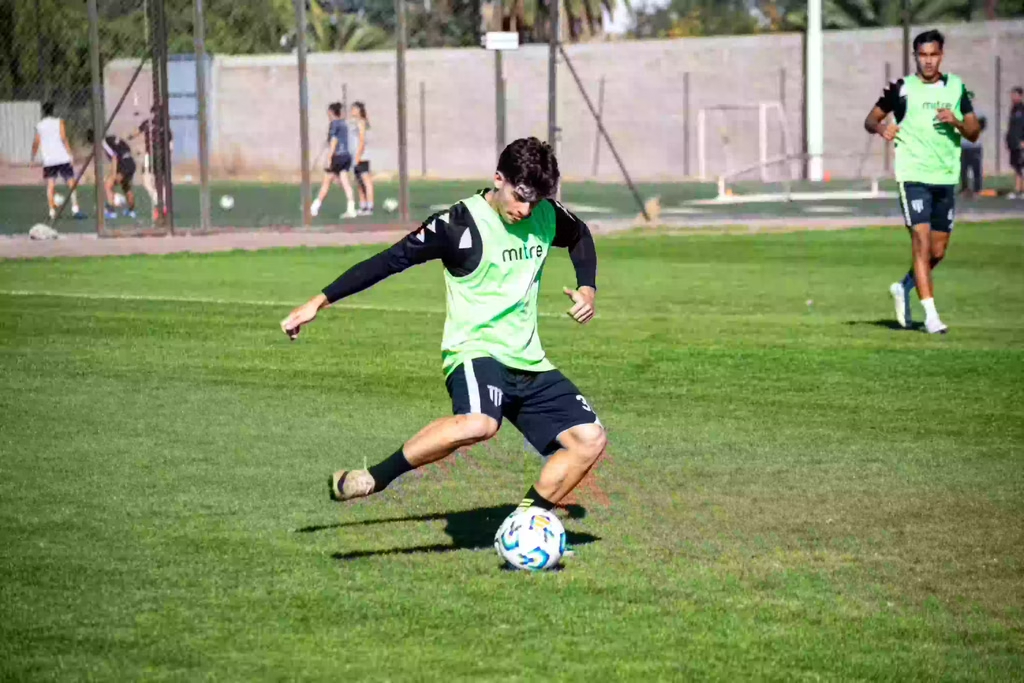
GPS accuracy can dip in stadiums with heavy roof coverage or dense surrounding structures that interfere with satellite signal, which is part of why many top venues pair GPS with optical camera tracking as a backup. The technology also can’t account for everything that affects injury risk on its own, sleep, nutrition, and psychological stress all matter too, so the best-run clubs treat GPS data as one input among several rather than the whole picture. If you’re tracking your own sessions rather than a professional squad’s, it’s worth knowing about common GPS tracker mistakes that throw off amateur-level data even when the hardware itself is working fine.
For players and coaches at the grassroots level curious about applying any of this without a professional-grade setup, our guides on tracking soccer performance at home and what player load in football actually measures are good next steps, and if fatigue late in matches is a recurring issue for your team, 7 soccer stamina training tricks tackles that directly.
Frequently Asked Questions
How do soccer teams use GPS tracking? Soccer teams use GPS tracking mainly to manage training load, reduce injury risk, and inform substitution timing. Players wear a small tracking pod that records distance, speed zones, accelerations, and player load, which fitness and coaching staff review daily to adjust training intensity for each individual.
What does a soccer GPS vest actually track? A typical GPS vest tracks total distance, speed zones from walking to sprinting, player load from accelerations and decelerations, and sometimes heart rate, giving staff a full picture of both physical output and physiological effort.
Can GPS tracking prevent soccer injuries? It can’t guarantee injury prevention, but research has repeatedly linked sudden spikes in training load relative to a player’s recent baseline with a higher risk of soft-tissue injury, so GPS data gives medical staff an objective early warning that wasn’t available before this technology.
Do professional soccer teams use GPS in matches or just training? Both. GPS tracking is used extensively in training to plan session intensity, and many top leagues also permit it during competitive matches, where it supports live substitution decisions and post-match performance review.
What brands of GPS trackers do soccer teams use? Catapult and STATSports are two of the most widely used systems across professional and collegiate soccer, with Kinexon also common for teams wanting real-time positional tracking alongside standard GPS metrics.
Is GPS tracking accurate indoors or in covered stadiums? Accuracy can drop in stadiums with heavy roof coverage that blocks satellite signal, which is why many top venues also run optical camera tracking systems as a backup or cross-check.