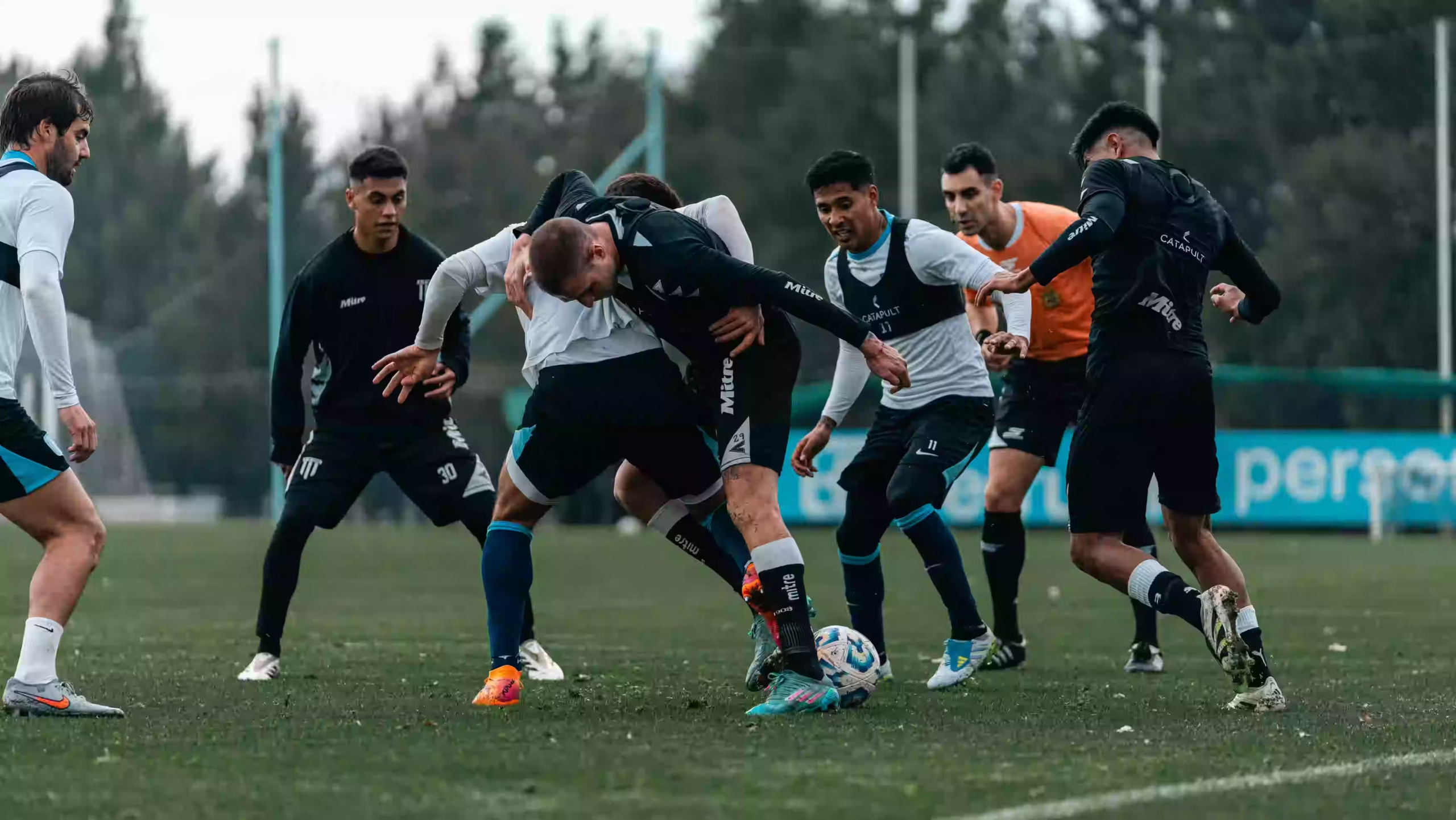
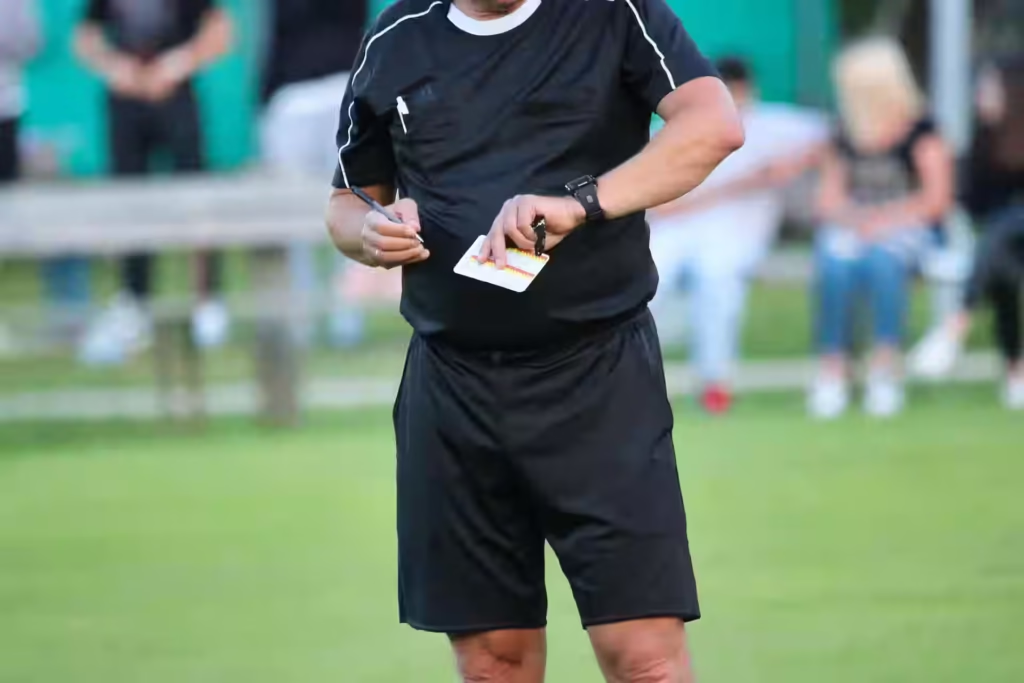

GPS trackers for soccer referees have quietly transformed how match officials analyze physical performance, yet most refs still leave the pitch without knowing their total distance, sprint counts, or positioning trends.
Ask a referee how far they ran last Saturday and most won’t have a clue. Ask a striker the same question and there’s a decent chance he’ll tell you to the meter, because someone on the coaching staff already pulled the data. That gap is a little strange when you think about it — referees are often on the move for the entire match, with no substitutions and no bench to rest on, yet almost nobody is tracking how their fitness holds up. This guide is about closing that gap: what GPS tracking actually looks like for match officials, which devices are worth your money, and which numbers are worth paying attention to.
Why Soccer Referees Need GPS Tracking
Refereeing isn’t just a mental exercise in knowing the laws of the game — it’s a genuine physical grind. A study of Brazilian top-flight referees tracked officials across dozens of official matches and found they were hitting meaningful high-intensity running loads, measured with GPS receivers for distance and top speed alongside heart-rate monitors for internal strain. That matters on the pitch: a referee who’s fading physically in the 80th minute is a referee who’s a half-step slower to the play, and that half-step is often the difference between calling an offside correctly and guessing. It’s part of why more federations and refereeing academies are handing out GPS units for games and training rather than treating fitness as something referees just sort out on their own. If you want the bigger picture on what this kind of data actually measures, it overlaps a lot with player load in football — same underlying idea, just pointed at the person blowing the whistle instead of the one chasing the ball.
So what does a referee, or a refereeing committee, actually get out of all this tracking? Three things, mostly:
- Whether fitness is dropping off across the 90 minutes, especially that brutal last 15
- Whether positioning — staying close enough to the play to make the right call — is improving season over season
- Whether training load is sensible, or quietly building toward an injury
How GPS Tracking Works for Match Officials
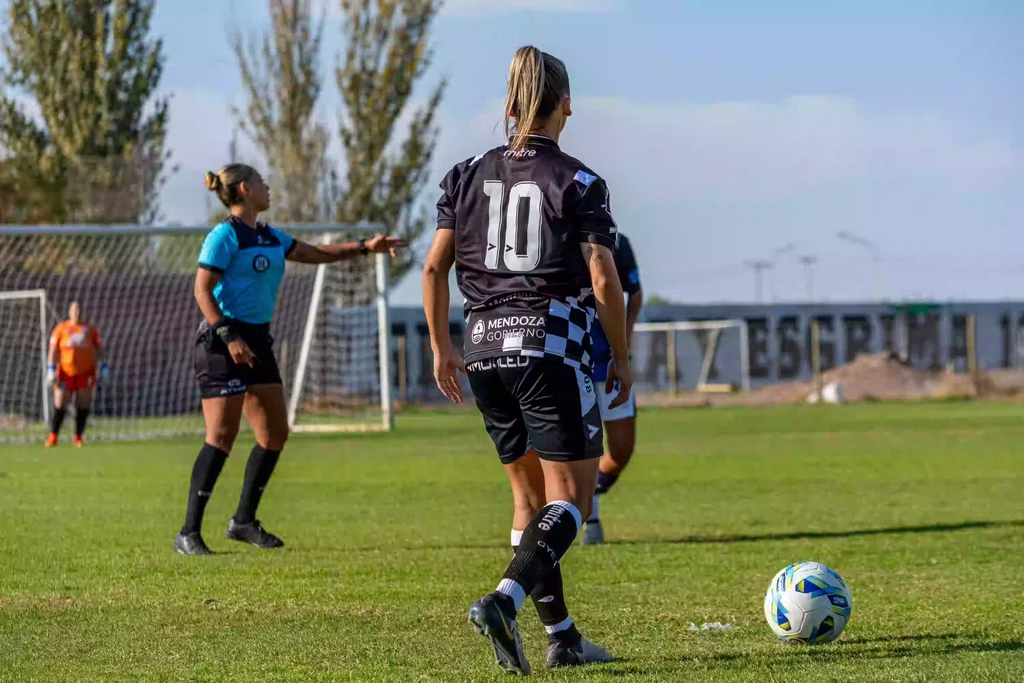
Strip away the branding and most referee GPS setups boil down to three parts working together: a GPS chip handling position and distance, an accelerometer picking up sprints and sudden direction changes, and — on most models — a heart-rate strap or optical sensor reading how hard the body is actually working underneath all that. Here’s roughly how the data moves from your wrist to a usable report:
GPS Satellite Signal
        │
        ▼
 Wearable GPS Unit (vest or watch)
        │
        ├── Position + Distance data
        ├── Speed + Sprint count
        └── Heart Rate (paired sensor)
        │
        ▼
   Mobile App / Cloud Sync
        │
        ▼
 Post-Match Report (heatmap, load, pace)
The unit logs raw position data every match, then syncs to a phone app after the final whistle, turning raw coordinates into a heatmap, a distance-per-half breakdown, and heart-rate zones the referee (or their assessor) can review.
Top GPS Trackers Built for Referees
1. REFSIX
REFSIX is built specifically for match officials rather than players, combining a match timer and incident notebook with performance tracking. Its Pro tier adds positioning heatmaps, card locations on the pitch, heart-rate tracking through the match, and a distance breakdown by half and by five-minute segment — useful for spotting second-half fatigue patterns.
2. Ref-Vision
Ref-Vision pairs with an Apple Watch to track GPS position and heart rate in real time, then lets referees sync that movement data with match footage for a side-by-side review of positioning decisions. It also supports GPX file export for referees who want to analyze data outside the app.
3. Standard GPS Vests (Catapult, STATSports-style units)
These are the same category of wearable used by players, worn under a referee’s kit. They offer the most granular accelerometer data but are generally built for club performance staff rather than individual referees, so they suit refereeing academies more than solo officials.
4. Garmin Forerunner Series
Garmin’s running-focused watches track distance, pace, and heart rate with reliable GPS accuracy, and export data as GPX or FIT files that can be reviewed in Garmin Connect or third-party analysis tools. Referees who already run for general fitness often find this the easiest device to justify, since it doubles as a training watch outside match days.
5. Polar Vantage Series
Polar’s Vantage watches lean harder into recovery metrics — training load, recovery time, and cardio load status — on top of standard GPS and heart-rate tracking. That recovery focus is useful for referees officiating multiple matches per week who need to know when fatigue is building up across a season, not just within a single game.
6. Apple Watch + a Referee App
An Apple Watch paired with Ref-Vision or a similar referee app turns a general-purpose device into a match-day tool: GPS position, heart rate, and match event logging all sync from the wrist. This is a practical middle ground for referees who already own an Apple Watch and don’t want a second dedicated device.
7. Whoop
Whoop skips GPS distance tracking entirely and focuses on strain, recovery, and sleep, worn continuously rather than just during matches. For a referee, it’s less useful for in-game positioning data but strong for understanding weekly workload — worth pairing with, rather than replacing, one of the GPS-based options above.
Key Metrics Referees Should Actually Track
| Metric | Why It Matters | Good Tool For This |
|---|---|---|
| Total distance covered | Baseline fitness and workload | REFSIX, GPS vest |
| High-speed running / sprints | Positioning readiness for fast play | GPS vest, smartwatch |
| Heart rate zones | Internal load, recovery need | Ref-Vision, REFSIX Pro |
| Distance by half | Fatigue pattern detection | REFSIX Pro |
| Positioning heatmap | Decision-making proximity to play | REFSIX Pro, Ref-Vision |
Choosing the Right Tracker: Beginners vs. Professionals
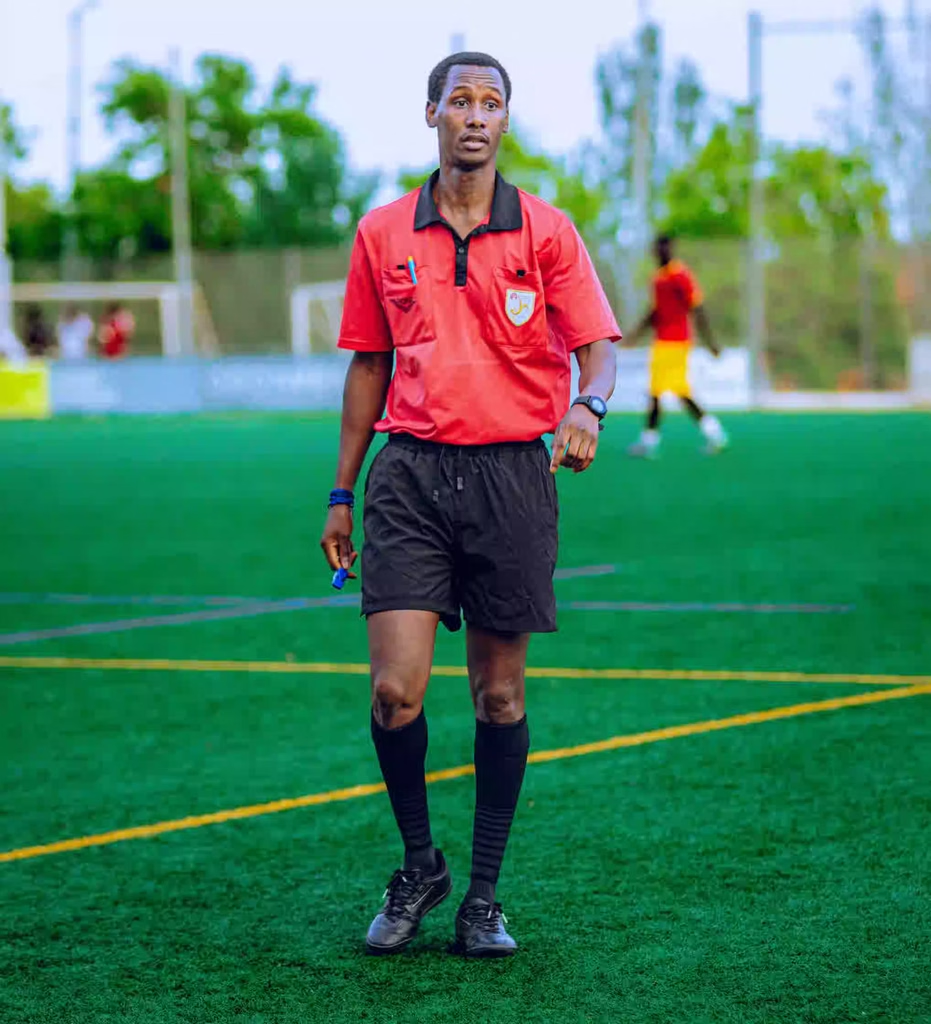
Beginner referees generally do best starting with a simple app-based timer plus a basic running watch, since the priority is building match fitness and consistent positioning habits. Professional and semi-professional referees benefit more from a dedicated system like REFSIX Pro or Ref-Vision, where heart-rate zones and half-by-half distance data support structured fitness programs set by refereeing bodies.
Fit matters too — a poorly fitted GPS vest or watch can affect data accuracy and comfort during a 90-minute match, similar to how the wrong footwear affects a player’s performance. If you’re also outfitting a full team or refereeing squad, our soccer cleat sizing guide covers how to get footwear fit right, which pairs naturally with any performance-tracking setup.
If you’re new to officiating altogether, it’s worth reading our guide to becoming a soccer referee before investing in any tracking hardware — fitness testing requirements vary by level, and that guide covers what’s actually required before a tracker becomes useful.
FAQ: GPS Trackers for Soccer Referees
Do soccer referees really need GPS trackers? Not strictly, but tracking distance, sprints, and heart rate helps referees train specifically for match demands rather than generic fitness, and gives assessors objective fitness data.
What’s the best GPS tracker for a beginner referee? A basic running GPS watch paired with a free app like REFSIX covers the essentials — match timer, incident log, and general distance/pace — without a big upfront cost.
Can referees use the same GPS vests as players? Yes, standard club-grade GPS vests work for referees too, though most amateur officials find a referee-specific app or watch more practical for day-to-day use.
How accurate are GPS trackers for referees? Consumer GPS units are generally reliable for distance and speed in open-field conditions, though accuracy can dip slightly during tight, fast direction changes — the same limitation seen in player-tracking research. For season-long trend tracking (fitness improving or declining), that margin of error rarely matters.
Do referees wear GPS vests in official matches? At the professional level, some competitions have referees wear GPS or heart-rate units under their kit as part of physical performance monitoring programs. At amateur and semi-professional levels, it’s far more common for referees to track fitness during training only, using a personal watch, rather than during the match itself.
How much do referee GPS trackers cost? A running GPS watch suitable for referee use typically starts in the budget-to-midrange bracket, while referee-specific software like REFSIX Pro adds a modest subscription on top of a phone or watch you likely already own. Dedicated GPS vests used by clubs cost significantly more and are usually a team or academy purchase rather than an individual one.
Can GPS data help referees get promoted to higher levels? Fitness testing is typically a separate, standardized requirement for promotion, but consistent GPS-tracked training can help a referee prepare for and pass those tests, and some assessors do look favorably on officials who can show structured fitness data over a season.
What’s the difference between a referee GPS system and a running watch? A referee-specific system like REFSIX or Ref-Vision adds match context — incident logging, card locations, half-by-half breakdowns — on top of the raw GPS and heart-rate data a running watch already collects. A running watch alone is cheaper and still useful, but it won’t organize the data around match structure the way a referee-built app does.