


The short answer on firm ground vs. turf soccer shoes comes down to what’s under your feet, not what’s on sale. Firm ground (FG) cleats use longer, molded studs built to dig into real grass. Turf (TF) shoes swap those studs for dozens of small rubber nubs designed to grip artificial surfaces without digging in at all. Wear the wrong one on the wrong field and you’re not just sacrificing traction, you’re raising your injury risk in a way that’s well documented in sports medicine research.
This isn’t a minor style choice the way some other cleat features are. The surface you play on most decides which pair actually belongs in your bag, and getting it backwards is one of the more common, and more expensive, mistakes new players make.
What Are Firm Ground (FG) Soccer Shoes?
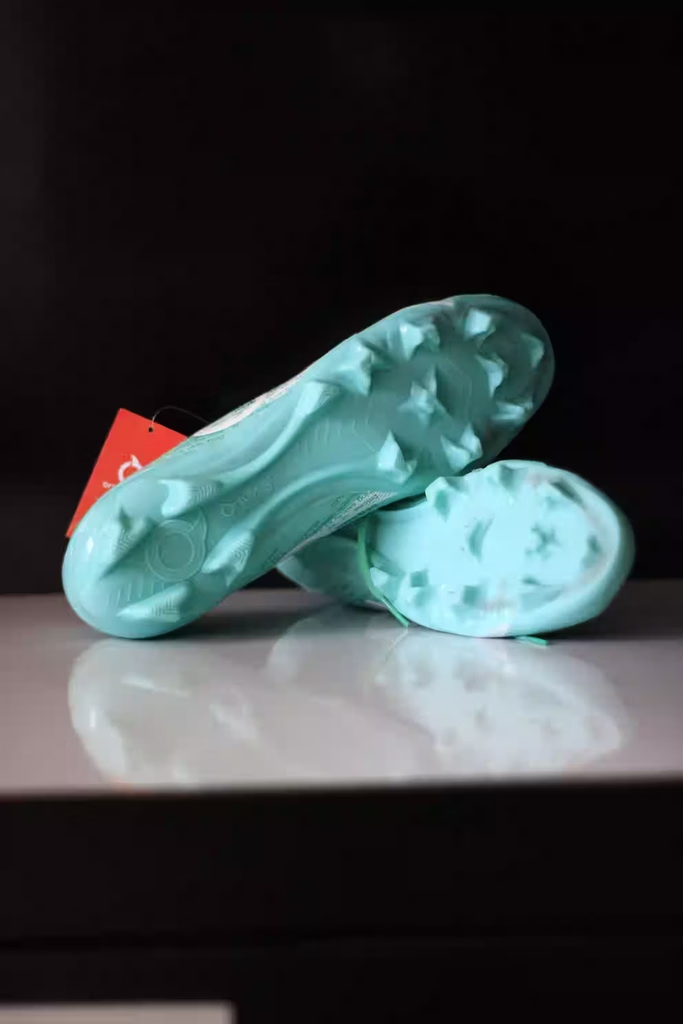
Firm ground cleats are the standard soccer shoe most players picture when they think “cleats.” They typically carry 10 to 14 molded studs, either conical or bladed, built to penetrate real soil and grass that has some natural give to it. That penetration is exactly what gives you the push-off power for sprints and the grip for sharp cuts on a normal grass pitch. Adidas’s own footwear guide describes FG as the most common cleat type on the market, and for good reason, it’s genuinely the most versatile option for outdoor play and covers the vast majority of matches most players will ever step onto.
What Are Turf (TF) Soccer Shoes?

Turf shoes take a completely different approach. Instead of a handful of long studs, they pack dozens of short rubber nubs across a flatter, more cushioned outsole. Artificial turf doesn’t give the way natural grass does, so there’s nothing for a long stud to sink into. Turf shoes are built around that reality: they spread pressure evenly across more contact points and add extra cushioning in the midsole, since turf is noticeably harder underfoot than grass and that difference adds up over a full match or training session.
Firm Ground vs. Turf Soccer Shoes: Key Differences
| Feature | Firm Ground (FG) | Turf (TF) |
|---|---|---|
| Stud type | 10-14 molded conical or bladed studs | Dozens of small rubber nubs |
| Best surface | Natural grass, dry to slightly damp | Artificial turf, hard synthetic surfaces |
| Cushioning | Standard, built for grip over comfort | Thicker midsole, built for shock absorption |
| On the wrong surface | Studs skate on hard ground or catch on turf | Poor traction on real grass, no bite for cuts |
| Injury consideration | Can “stick and twist” if worn on turf | Generally the safer choice on synthetic surfaces |
That table is really the whole firm ground vs. turf soccer shoes decision in one place, but the “why” behind it matters just as much as the summary.
Can You Wear Firm Ground Cleats on Turf?
Technically, yes. Should you make a habit of it? Not really. Firm ground studs are designed to release cleanly from soil. On artificial turf, those same studs can catch in the synthetic fibers and rubber infill instead of releasing, which locks your foot in place for a split second while the rest of your body keeps moving through a turn or cut. Sports medicine researchers refer to this as a “stick and twist” mechanism, and it’s been linked to a higher risk of knee and ankle injuries in studies reviewing cleat-surface interaction across natural and artificial fields. It’s also harder on the shoes themselves. FG studs wear down faster on the abrasive surface of turf, and some manufacturers won’t honor a warranty if the damage clearly came from using firm ground cleats on the wrong surface.
Can You Wear Turf Shoes on Grass?
You can, but it’s not a great trade either. The small rubber nubs on turf shoes just don’t dig into real grass and soil the way molded studs do, so you’ll notice a real drop in traction on cuts, sprints, and sudden stops. It’s a safer mismatch than the reverse, wearing turf shoes on grass won’t lock your foot the way FG cleats can on turf, but you’re giving up a meaningful amount of performance.
Firm Ground vs. Turf Soccer Shoes: Which One Do You Actually Need?
If You Play Mostly on Grass
Get a pair of FG cleats and don’t overthink it. They’re the most versatile option for natural grass fields across nearly all conditions short of genuinely waterlogged mud.
If You Play Mostly on Turf
Get dedicated turf shoes. The comfort difference alone is noticeable over a full season, and you’ll avoid the injury risk that comes with forcing firm ground studs onto a surface they weren’t built for.
If You Play on Both Regularly
This is the one situation where owning two pairs genuinely pays for itself. Many players who split time between grass leagues and turf training facilities keep both an FG and a TF pair in rotation rather than compromising with a single “do everything” shoe.
Comfort and Joint Impact
Turf is measurably harder underfoot than grass, and that difference compounds over 90 minutes. Turf shoes account for this with thicker, more cushioned midsoles than firm ground cleats typically carry, which matters for anyone logging regular sessions on artificial surfaces. If you’re the type who tracks total training load across a week, it’s worth remembering that player load in football isn’t just about volume, the surface and footwear under your feet factor into how much stress your joints are actually absorbing.
How Long Do Turf Shoes Last Compared to Firm Ground Cleats?
Turf is abrasive, and it wears down soft rubber nubs faster than firm ground studs wear down on grass. Most players who train on turf multiple times a week find their turf shoes need replacing more often than a pair of FG cleats used mainly for weekend matches on grass. That’s simply part of the cost of playing regularly on synthetic surfaces, not a sign you bought the wrong pair.
Getting the Fit Right, Whichever You Choose
Picking between firm ground vs. turf soccer shoes only solves half the problem if the shoe itself doesn’t fit properly. Our soccer cleat sizing guide walks through how to measure your foot correctly and avoid the sizing mistakes that trip up most first-time buyers, and if width has always been the real issue rather than length, our guide to soccer cleats for wide feet covers which brands actually accommodate a wider foot instead of just promising to.
For newer players building out their first training routine, working through a beginner soccer training plan is a natural next step once your footwear is sorted, since a lot of early acceleration and cutting drills depend on having the right traction under your feet. If your training leans heavily on speed work, our guides on sprint speed training at home and explosive acceleration drills for beginners are both worth pairing with the right shoe for your surface, since traction is half of what makes those drills actually transfer to a real match.
Frequently Asked Questions

What is the difference between firm ground and turf soccer shoes? Firm ground shoes use 10 to 14 molded studs built to penetrate natural grass, while turf shoes use dozens of small rubber nubs designed to grip artificial surfaces without digging in. The firm ground vs. turf soccer shoes decision really comes down to matching the stud design to what’s actually under your feet.
Can you wear firm ground cleats on turf? You can, but it’s not recommended. The longer studs can catch in artificial turf fibers instead of releasing cleanly, which raises the risk of knee and ankle injuries and wears the studs down faster than intended.
Are turf shoes as good as cleats on grass? Not really. Turf shoes lack the stud depth needed to grip natural grass properly, so you’ll lose traction on sprints and sharp cuts compared to a proper pair of firm ground cleats.
Do I need both firm ground and turf soccer shoes? Only if you regularly play on both surfaces. If you’re consistently on one type of field, buying the shoe built for that surface is more useful than trying to find a single pair that compromises on both.
Are turf shoes more comfortable than firm ground cleats? Generally, yes, on artificial turf specifically. Turf shoes are built with thicker, more cushioned midsoles to absorb the extra impact of a harder synthetic surface, which most players notice over a longer session.
Why do firm ground cleats wear out faster on turf? Artificial turf is more abrasive than natural grass, and firm ground studs weren’t designed for that friction. The studs, and often the outsole itself, degrade faster than they would on a normal grass field.