
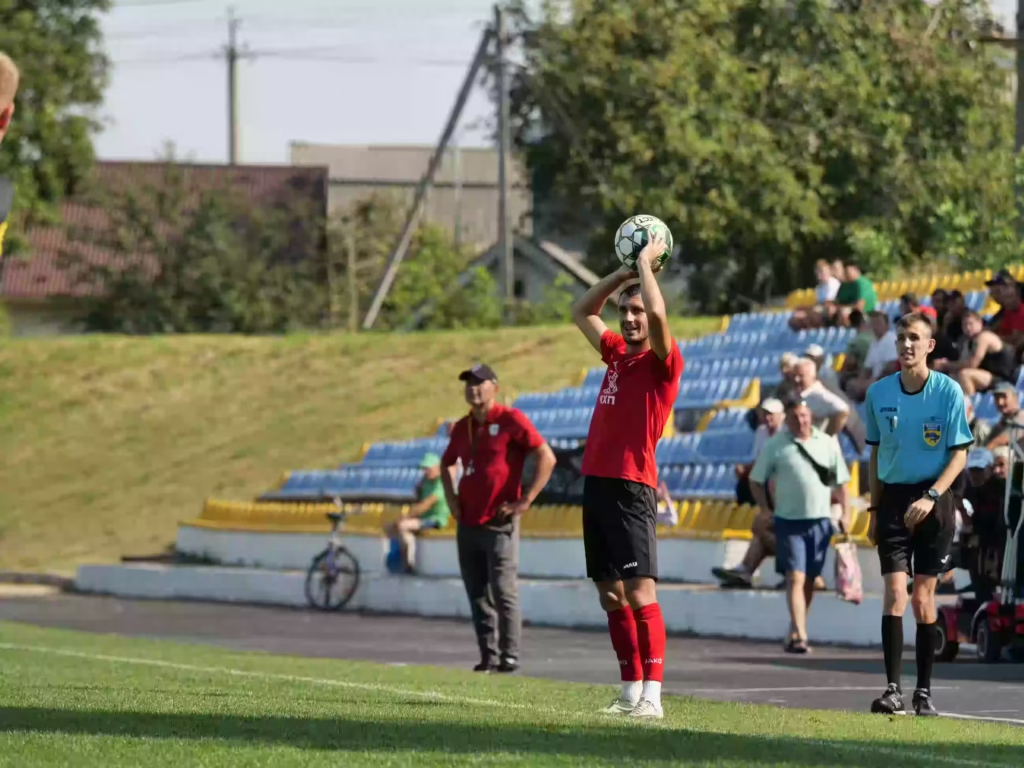

Soccer throw-in rules look simple from the sidelines, plant your feet, chuck the ball, get on with the game, but there’s a genuinely specific set of requirements behind that quick restart, and getting even one of them wrong hands the ball straight to the other team. And as of the 2026/27 season, there’s a brand new rule in the mix that a lot of players, and honestly a fair few coaches, still don’t know about.
This isn’t a rehash of the same five bullet points every other throw-in article repeats. Here are all nine rules that actually govern a throw-in under the current Laws of the Game, including the one that’s genuinely new this year.
1. Who Actually Gets the Throw-In

The throw-in goes to the opponents of whichever player last touched the ball before it fully crossed the touchline, whether the ball went out on the ground or in the air. It doesn’t matter which team was originally in possession or who was closer when it went out, only who touched it last.
2. The Correct Throwing Technique Behind Soccer Throw-In Rules
This is where most throw-in content stops, but it’s worth getting exactly right. Under IFAB’s Law 15, at the moment the ball is released, the thrower must be facing the field of play, have part of each foot either on the touchline or on the ground outside it, and deliver the ball with both hands from behind and over the head, from the exact spot where the ball left the field. Miss any single element of that and it’s not a legal throw.
3. What Actually Counts as a Foul Throw
A “foul throw” sounds like a disciplinary offense, but it isn’t one under soccer throw-in rules, it’s a procedural violation, not a foul in the tackling sense. Common ways a throw gets ruled illegal: a foot lifting off the ground during release, the ball coming from in front of or beside the head instead of behind it, one hand doing most of the work instead of a genuine two-handed release, or the thrower’s foot landing fully inside the pitch instead of on or behind the line. The consequence is simple either way, the throw-in is awarded to the other team from the same spot.
4. Opponents Must Stay 2 Meters Back

Every opponent has to stand at least 2 meters (roughly 2 yards) from the point on the touchline where the throw is being taken. If someone closes in on that distance and it distracts or interferes with the thrower, the referee can caution them for unsporting behavior, and if the throw-in has already been taken, the restart becomes an indirect free kick for the throwing team.
5. There’s No Offside Directly From a Throw-In
This one surprises a lot of casual fans. A player cannot be flagged offside receiving the ball straight from a throw-in, full stop. It’s a specific carve-out in the offside law, and it’s exactly why you’ll see attacking teams push a forward into a position that would be offside from open play just before a long throw goes in. Once a teammate touches the ball after that, normal offside rules kick back in immediately.
6. You Cannot Score Directly From a Throw-In

A throw-in is classified as an indirect restart, which means a goal can’t be scored straight from it, no matter how good the throw is. If the ball somehow flies straight into the opponent’s net, it’s a goal kick instead of a goal. If it goes into the thrower’s own net, the other team gets a corner kick. Either way, no goal counts on its own from the throw.
7. The Thrower Can’t Touch the Ball Again Immediately
Once the ball leaves the thrower’s hands, they can’t play it a second time until another player, from either team, has touched it. Do that and it results in an indirect free kick for the opposing team from the spot of the second touch. It’s the same underlying principle that governs restarts like corners and free kicks, you put the ball into play, then you step back into normal play like everyone else.
8. The Ball Has to Actually Enter the Field to Be Live
The ball isn’t officially in play until it enters the field of play. If it touches the ground before crossing the line, the throw doesn’t count, and the same team retakes it from the same spot. This is a small detail, but it’s exactly the kind of thing that catches out a thrower rushing a restart on a windy day.
9. New for 2026/27: The Five-Second Countdown Changes Soccer Throw-In Rules

Here’s the genuinely new one, and the reason soccer throw-in rules look a little different this season than they used to. IFAB confirmed a package of changes for the 2026/27 season aimed at cutting down on time-wasting, and throw-ins are directly affected. If a referee believes a team is deliberately delaying a throw-in, they can now start a visible five-second countdown. If the ball isn’t in play by the time the countdown ends, possession simply switches to the other team. It’s the same countdown logic that was already being used to stop goalkeepers holding the ball too long, now extended to throw-ins and goal kicks as well. This rule debuted at the 2026 FIFA World Cup and applies across virtually every competition from that point forward, which makes it one of the more meaningful rule changes to hit the sport in the last few years, and it’s genuinely still missing from a lot of throw-in explainer content online.
Quick Reference: What Makes a Throw Legal vs. Illegal
| Situation | Legal or Foul Throw |
|---|---|
| Both feet on the ground, on or behind the line | Legal |
| Front foot lands fully inside the pitch | Foul throw |
| Ball released from behind and over the head | Legal |
| Ball released from in front of or beside the head | Foul throw |
| Both hands used simultaneously | Legal |
| Thrower turned side-on or away from the field | Foul throw |
| Thrower delays past the 5-second countdown (2026/27) | Possession switches to the other team |
Why This Matters Beyond Just Knowing the Rules
Set-piece restarts like throw-ins are a genuine tactical weapon, particularly in the attacking third, where a long throw can function almost like a short corner kick delivery. If you coach or play and want the tactical side of dead-ball situations covered in more depth, our guide on how to defend a corner kick breaks down the same kind of structured, rehearsed defending that smart teams also apply to dangerous throw-ins near the box. And since referees are the ones actually enforcing every rule on this list in real time, often while covering serious ground themselves, our piece on how soccer referee fitness actually gets tested covers the physical standard officials are held to so they can keep up with exactly these kinds of split-second calls.
Frequently Asked Questions
What are the basic rules for a throw-in in soccer? Soccer throw-in rules require the thrower to face the field, keep part of each foot on or behind the touchline, and deliver the ball with both hands from behind and over the head, from the exact point where it left the pitch. Breaking any of these results in the throw-in being awarded to the other team.
What is a foul throw in soccer? A foul throw is a procedural violation of the throwing technique, not a disciplinary foul, common examples include lifting a foot off the ground, releasing the ball from in front of the head, or using only one hand. The penalty is simply losing the throw-in to the opposing team.
Is there offside from a throw-in? No. A player cannot be penalized for being in an offside position when receiving the ball directly from a throw-in. Normal offside rules only apply again once a teammate touches the ball afterward.
Can you score directly from a throw-in? No. A throw-in is an indirect restart, so a goal can’t be scored straight from it. A ball thrown directly into the opponent’s goal results in a goal kick, and one thrown into your own goal results in a corner kick for the opposing team.
How far must opponents stand during a throw-in? Opponents must stay at least 2 meters (about 2 yards) away from the point on the touchline where the throw-in is taken. Getting closer and interfering with the thrower can result in a caution for unsporting behavior.
What is the new 2026/27 throw-in rule? Starting with the 2026/27 season, referees can start a visible five-second countdown if they believe a throw-in is being deliberately delayed. If the ball isn’t in play before the countdown ends, possession switches to the other team.


