
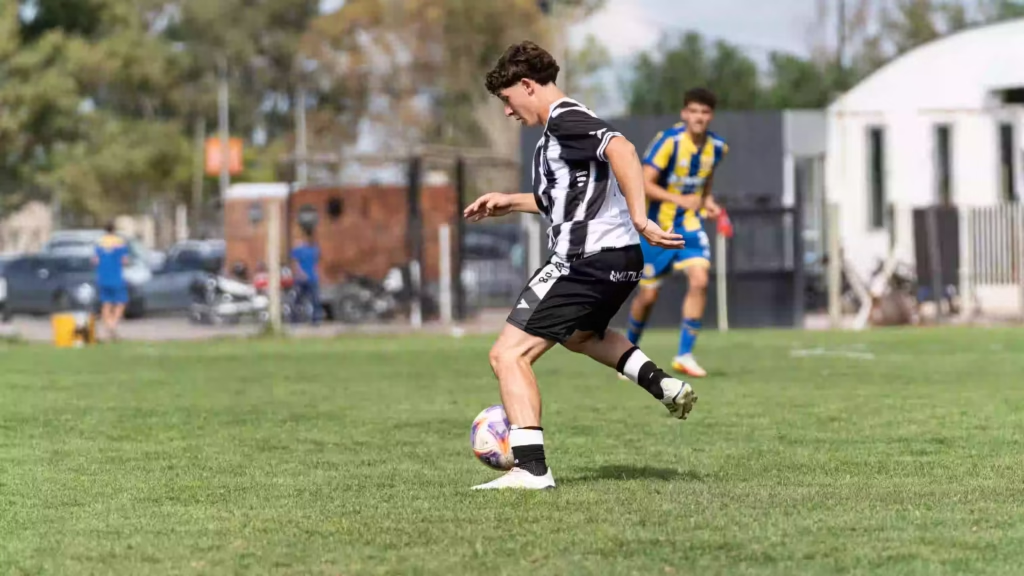

Soccer winger running distance typically sits between 9 and 11 kilometers per match, solid but not actually the highest of any position on the pitch, that title usually goes to central midfielders. The real story with wingers isn’t total distance at all. It’s what kind of distance they’re covering. Wingers consistently rank among the top positions for sprint and high-speed running, which is a very different physical demand than simply covering the most ground.
That distinction matters more than the headline number. A central midfielder might jog and shuffle their way to 12 kilometers over 90 minutes. A winger covering 2 fewer kilometers total might be doing it through repeated, explosive sprints up and down the touchline, which is a completely different kind of tired by full time. Here are seven things worth actually understanding about how far a winger runs, and why the total isn’t the part that matters most.
1. Soccer Winger Running Distance Averages 9 to 11 Kilometers

Research across professional leagues generally places wingers in the 9 to 11 kilometer range per match, putting them roughly on par with full-backs and slightly behind central and wide midfielders on total distance alone. It’s a solid number, but on a straight leaderboard of total distance covered, wingers usually land in the middle of the pack rather than at the top.
2. Wingers Often Sprint More Than Anyone Else on the Pitch
This is where wingers actually separate themselves. Multiple studies looking at sprint distance specifically, rather than total distance, have found wide attacking players covering more ground at maximum speed than any other position, sometimes even more than out-and-out strikers. Total distance measures how much ground you cover. Sprint distance measures how often you’re doing it at genuinely explosive speed, and that’s the metric where wingers consistently stand out.
3. Wingers and Full-Backs Move in Strikingly Similar Patterns
Research comparing high-speed running thresholds across positions found that wingers and full-backs show remarkably similar high-speed running patterns, which makes sense once you picture the job: both positions spend the match making repeated overlapping and underlapping runs along the same flank. A winger tracking back to help defensively and a full-back bombing forward to support an attack are, physically speaking, doing a very similar job in opposite directions.
4. Central Midfielders Still Win on Total Distance, But Not on Intensity

Central midfielders typically log more total distance than wingers, largely because their role demands constant, lower-intensity movement across a wider zone of the pitch throughout the full 90 minutes. Wingers trade that constant movement for shorter bursts of much higher intensity. If you want the full breakdown of how the midfield position compares, our guide on how far a soccer midfielder actually runs per game covers that side of the comparison directly.
5. Wingers Deal with Real Post-Match Fatigue and Muscle Damage
Research on running performance and recovery by playing position found that positions involving heavy sprint and high-intensity workloads, wingers and wide attackers included, showed significant muscle damage and fatigue markers that persisted up to 24 hours after a match. That’s a genuinely important point for recovery planning. A winger’s soreness the day after a game isn’t just about how far they ran, it’s about how many times they had to explosively accelerate and decelerate doing it. Our guides on recovering from overtraining in football and why rest and muscle growth matter as much as extra training both apply directly to a position dealing with this kind of repeated-sprint fatigue.
6. Competition Level and Tactical System Both Move the Number

A winger playing in a possession-heavy system that keeps the ball on the ground will generally cover less sprint distance than one playing in a team built around quick transitions and counter-attacks, where the winger’s whole job is exploiting space in behind at full speed. League standard matters too, faster, more direct competitions tend to push soccer winger running distance higher across the board, sprint numbers included.
7. This Is All Measured Through GPS Tracking
None of these numbers exist without GPS-based tracking worn during matches and training, the same technology behind every soccer winger running distance figure quoted anywhere online. Our guide on how soccer teams use GPS tracking covers exactly how this data gets collected and applied, and if you want to know which specific numbers actually matter for a position like this, our breakdown of soccer performance data worth tracking goes into more depth on sprint counts and high-intensity zones specifically.
Training Implications for Wingers
If soccer winger running distance is really about explosive sprint output rather than raw volume, training has to reflect that. Piling on more steady-state distance work misses the point entirely for this position. Our guides on increasing sprint speed in football at home and explosive soccer acceleration drills for beginners are both built around exactly the kind of repeated, high-intensity output a winger actually needs on matchday, far more relevant than another long, slow conditioning run.
Frequently Asked Questions
How far does a soccer winger run in a game? Soccer winger running distance typically falls between 9 and 11 kilometers per match, which is solid but usually not the highest total of any position, that distinction generally goes to central midfielders.
Do wingers sprint more than other positions? Yes, often significantly more. Research measuring sprint distance specifically, rather than total distance, has repeatedly found wide attacking players covering more ground at maximum speed than most other positions on the pitch.
Why do wingers get so sore after matches? Positions with heavy sprint and high-intensity workloads, wingers included, show measurable muscle damage and fatigue that can persist up to 24 hours after a match, driven by repeated explosive acceleration and deceleration rather than total distance alone.
Do wingers or full-backs run more? The two positions show strikingly similar high-speed running patterns, since both roles involve repeated overlapping runs along the same flank, just typically in opposite directions during a given phase of play.
Is total distance the best way to measure a winger’s workload? Not really. Sprint distance and high-intensity running are generally more meaningful for wingers specifically, since the position’s demands are built around explosive bursts rather than steady total ground covered.
How is winger running distance actually measured? Through GPS-based tracking systems worn during matches and training, the same core technology used across professional soccer to measure total distance, sprint counts, and high-intensity output for every position on the pitch.


