
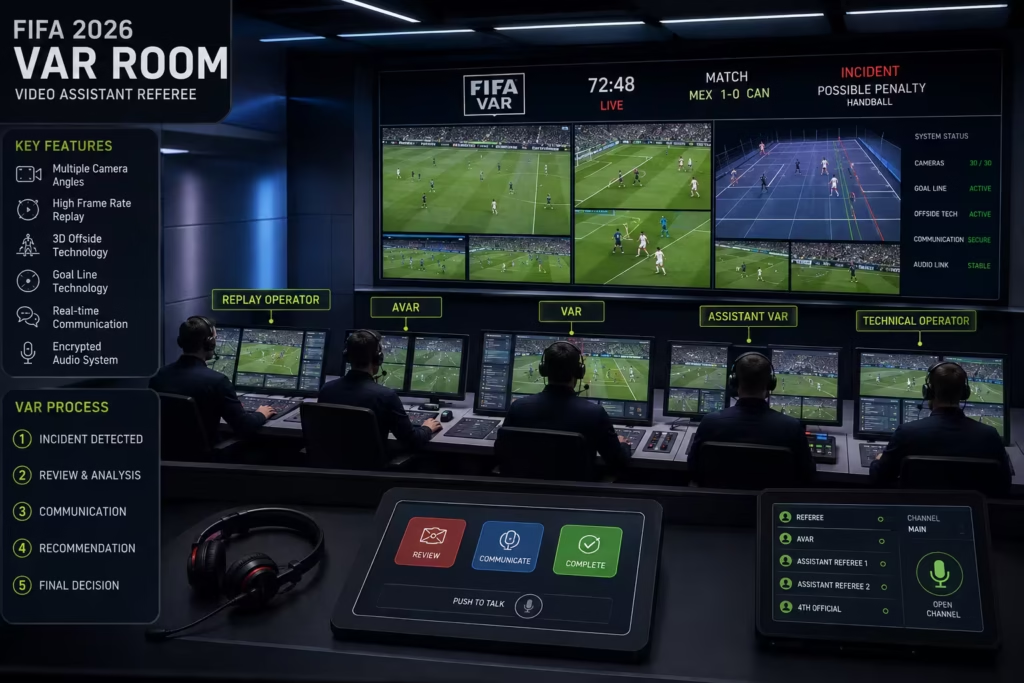

There’s a moment in every big match when the stadium holds its breath.
A foul is called. Players surround the referee. Millions watching on TV lean forward. And somewhere in that chaos, there’s a calm voice in the referee’s ear.
That voice is part of the FIFA referee communication system 2026 a quiet, invisible network that keeps the modern game fair, fast, and under control.
Let’s break it down step by step. Not in robotic terms, but in real, human football language because this system isn’t just technology. It’s the backbone of decision-making at the highest level.
FIFA Referee Communication System 2026: The Backbone of Modern Football Decisions
If you’ve watched recent World Cups or top-tier tournaments, you’ve already seen this system in action without realizing it.
The FIFA referee communication system 2026 is a fully integrated setup that connects the following:
- The center referee
- Assistant referees (linesmen)
- The fourth official
- VAR (Video Assistant Referee) team
All in real time. No delays. No confusion.
In my opinion, this system is one of the biggest reasons modern football feels more controlled than it did 15–20 years ago. Back then, referees relied mostly on eyesight and instinct. Now? They’ve got a team in their ear. And just like referees rely on communication systems, players rely on performance data. If you want to understand the numbers behind modern football, Football GPS Metrics Explained 2026: The Ultimate Way to Improve Performance breaks down how data like sprint distance and workload shapes the game today.
Step-by-Step: How the FIFA Referee Communication System 2026 Works
Let’s walk through exactly how it functions during a match.
Step 1: The Referee Wears a Wireless Communication Kit
Before kickoff, every official is equipped with:
- A lightweight headset with a microphone
- An earpiece (often hidden)
- A belt-mounted radio transmitter
This is the core of the FIFA referee communication system 2026.
These devices use encrypted radio frequencies, ensuring zero interference even in a packed stadium with 80,000 fans and thousands of signals.
Step 2: Constant Open Audio Channel Between Officials
Here’s something most fans don’t know: referees don’t “call” each other. The line is always open.
That means:
- Assistant referees can instantly speak
- The center referee hears everything in real time
- No button pressing during critical moments
So when a tight offside happens, the assistant referee doesn’t wait. They speak immediately:
“Offside, offside—number 9.”
And the decision is made faster than you can blink.
Step 3: Integration With VAR (Video Assistant Referee)
This is where the FIFA referee communication system 2026 becomes truly powerful.
The VAR team sits in a remote operations room (or sometimes in-stadium), watching multiple camera angles.
When something controversial happens:
- VAR reviews the footage instantly
- They speak directly to the referee through the system
- The referee can pause the game if needed
You’ve probably heard this phrase on broadcasts:
“Checking possible penalty.”
That’s not for the crowdit’s part of the communication chain.
Step 4: Referee Receives Real-Time Guidance
The referee remains the final decision-maker. Always.
But through the system, they get:
- Confirmation from assistants
- Visual analysis from VAR
- Alerts about unseen incidents
This reduces human error significantly.
And honestly? It also reduces pressure. Imagine making a World Cup decision alone versus having a team backing you up in real time.
Step 5: Use of Beep Flags for Silent Alerts
Assistant referees still use flags but now they’re smarter.
Modern flags in the FIFA referee communication system 2026 include:
- A built-in button
- A vibration or beep signal sent to the referee
So even if the referee doesn’t see the flag, they feel or hear the alert instantly.
This is especially useful during:
- Fast counterattacks
- Crowded penalty box situations
Step 6: Encrypted and Interference-Free Communication
This system operates on secure frequencies.
Why does that matter?
Because:
- Stadium noise won’t interrupt signals
- Broadcasters can’t interfere
- Hackers or external devices can’t access it
FIFA has invested heavily in making this system reliable across all environments—from humid climates to freezing temperatures.
Step 7: Backup Systems Always Ready
Here’s something that separates elite tournaments from lower leagues: redundancy.
The FIFA referee communication system 2026 includes:
- Backup radios
- Spare headsets
- Alternate frequency channels
If something fails mid-match, officials switch instantly. No downtime. No excuses.
Why the FIFA Referee Communication System 2026 Matters More Than Ever
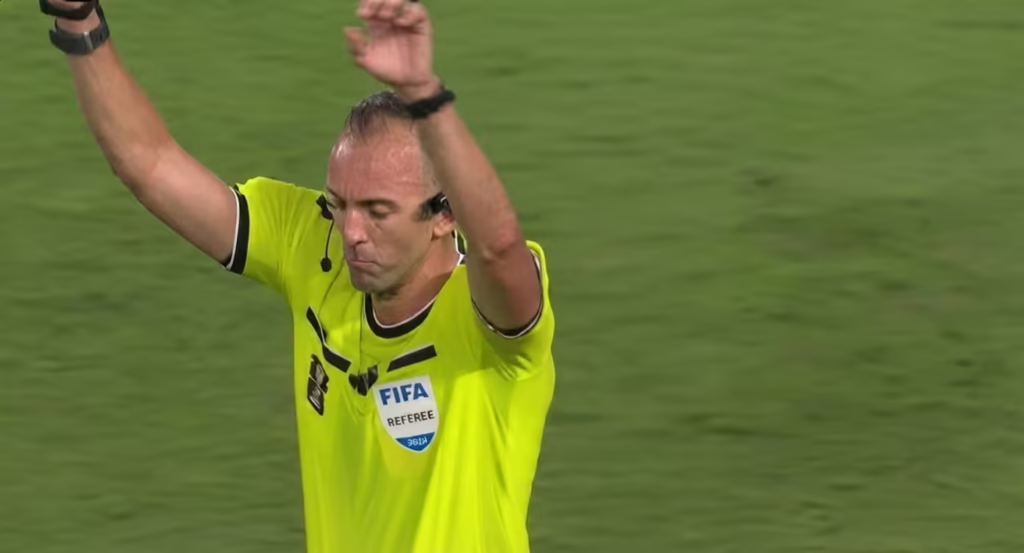
Let me be honestfootball today is faster, sharper, and more scrutinized than ever.
Every decision is:
- Replayed in slow motion
- Analyzed by pundits
- Debated on social media
Without the FIFA referee communication system 2026, referees would be overwhelmed.
This system:
- Improves accuracy
- Speeds up decisions
- Reduces controversy (not eliminates, but reduces)
And in my opinion, it’s one of the few technologies that has genuinely improved the flow of the game instead of slowing it down.
How AI in Sports 2026 Is Changing the Game
Artificial intelligence is reshaping football from tactics to injury prevention and even referee decisions. This deep dive shows how AI is transforming the sport in 2026 and beyond.
Real Match Scenario: How It Plays Out
Picture this.
A striker goes down in the box. The stadium erupts.
Here’s what happens instantly:
- Assistant referee: “No foul from my angle.”
- VAR: “Checking possible contact.”
- Replay reviewed in seconds
- VAR: “Minimal contact, recommend no penalty.”
- Referee signals play on
All of that? Happens in under 10–15 seconds.
That’s the FIFA referee communication system 2026 at work.
FAQ: FIFA Referee Communication System 2026
What is the FIFA referee communication system 2026?
It is a wireless communication network that connects referees, assistant referees, and VAR officials in real time during matches.
Do referees hear VAR all the time?
Yes. The communication channel remains open, allowing instant interaction without delays.
Can fans hear referee communication?
Usually no. Only selected audio is shared during broadcasts for transparency.
Is the referee still in charge?
Absolutely. The referee makes the final decision, even after VAR input.
What happens if the system fails?
Backup systems are immediately activated, ensuring continuous communication.
Does this system eliminate all wrong decisions?
No system is perfect. But the FIFA referee communication system 2026 significantly reduces errors and improves consistency.
Best GPS Trackers for Football Players: Ultimate Guide for 2026
Want to know how elite players track speed, distance, and performance in real time? This guide breaks down the top GPS devices used in modern football and how they give teams a competitive edge.
Final Thoughts
Football will always have debate. That’s part of its beauty.
But behind every whistle today is a network of voices, data, and instant feedback. The FIFA referee communication system 2026 doesn’t replace human judgment it strengthens it.
And if you ask me, that’s exactly how technology should work in sports.
Quiet. Precise. Invisible.
But absolutely essential.
For official insights and technical updates, check FIFA’s technology section: