


A 10-minute soccer practice routine is really all a beginner needs to start improving — no team, no coach, not even a full-size goal in the backyard. Just a ball, a wall, and ten honest minutes.
That’s the whole idea here. This routine is built for beginners who want to get better on their own schedule, without turning practice into a second job. Ten minutes sounds small, sure. But stack it over a month and you’ve put in real, repeated touches on the ball — and touches are what actually build a soccer player. Not motivation. Not gear. Touches.
I’ve broken the session into seven skills below, with a minute-by-minute plan you can follow today. No fluff, no invented numbers dressed up as research — just what genuinely works when you’re starting from zero.
Table of Contents
Why a 10-Minute Soccer Practice Routine Actually Works
Most soccer advice online tells beginners to train 30, 60, sometimes 90 minutes a day. Great advice, if you already have the habit. For a true beginner? It’s a decent way to quit by day four.
The honest truth is simpler than any of that: consistency beats duration. Someone who touches the ball for ten focused minutes every single day for a month is going to improve more than someone who grinds hard once a week and skips the rest. Why? Because skill acquisition — in soccer or any sport — comes from repetition done with attention, not from how exhausted you feel afterward.
There’s a safety angle too, and it’s worth taking seriously. Youth and beginner injury-prevention frameworks, including FIFA’s own 11+ program, are built around short, structured warm-up and movement routines rather than long, unstructured sessions. A tight 10-minute plan keeps intensity controlled almost by default, which matters a lot when your body hasn’t yet adjusted to what soccer actually demands of it.
I’ll be honest about where this opinion comes from: I’ve watched a lot of beginners try to “train like the pros” and burn out within two weeks. Every time. So no, I don’t think the ten-minute routine is a compromise. I think it’s the smarter starting point — full stop. Bigger sessions can come later, once the habit actually sticks.
The 7-Skill, 10-Minute Soccer Practice Routine

Here’s the full breakdown. Each skill gets roughly 60–90 seconds. Set a timer, keep the ball moving, and don’t overthink it.
1. Toe Taps (Minutes 0–1.5)
Place the ball in front of you. Tap the top of it with one foot, then the other, alternating quickly like you’re climbing stairs. This wakes up your feet, warms your ankles, and builds the light touch you’ll need for close control later — and it’s a gentle way to activate the same lower-leg muscles a soccer ball works throughout a full session.
- Keep your taps quick and small
- Stay on the balls of your feet
- Aim for rhythm, not speed, in the first few reps
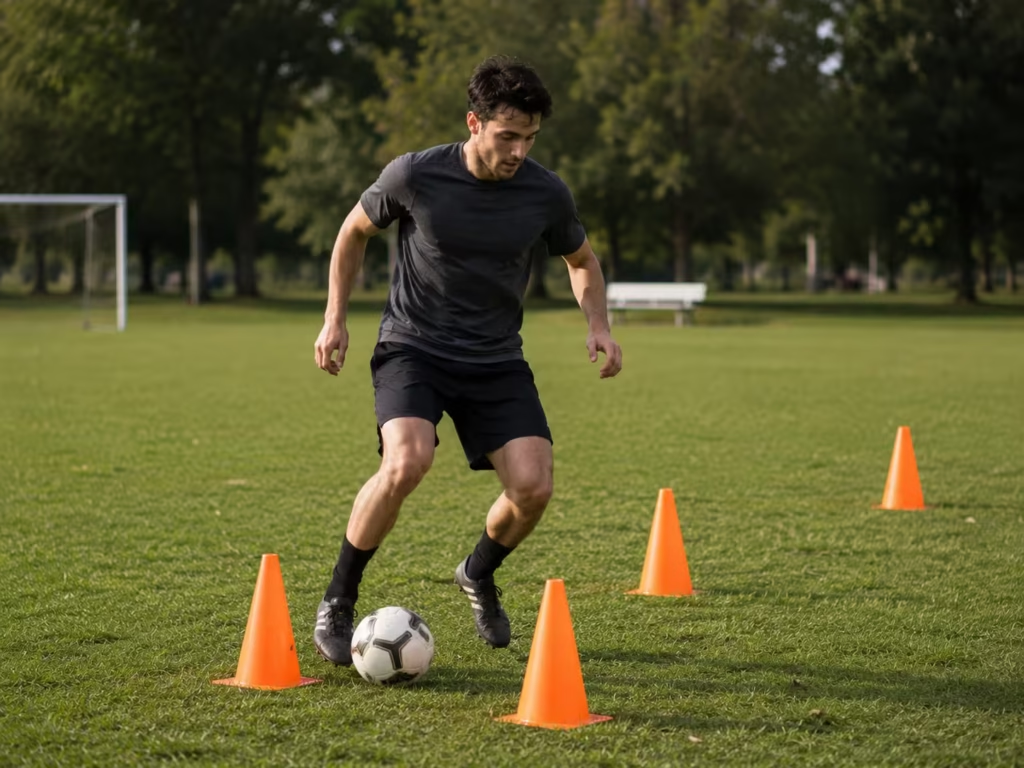
2. Cone (or Object) Dribbling (Minutes 1.5–3)
Set up four or five household objects — shoes, water bottles, whatever you’ve got — in a zig-zag line. Dribble through using both feet, keeping the ball close.
This is the single most important habit for a beginner: learning to dribble with your head up instead of staring at the ball. Glance at your “cones,” then look up. Repeat. Once this feels comfortable, you can layer in some beginner-friendly acceleration drills to sharpen your first three steps out of the dribble.
3. Wall Passing (Minutes 3–4.5)
A wall is the best training partner a beginner will ever have. Stand a few steps back and pass the ball firmly into the wall, then control the rebound with one touch before passing again.
- Alternate feet every few reps
- Focus on a clean first touch that sets you up for the next pass
- This single drill builds passing accuracy and first-touch control at the same time
4. Push-Pull Footwork (Minutes 4.5–5.5)
Place your foot on top of the ball, roll it forward, then pull it back with the sole. This simple push-pull motion builds the foundation for close control and changes of direction — two things every beginner struggles with early on. If you want to build the strength behind those quick direction changes, pair this drill with a few moves from our guide on building explosive leg power at home.
5. Juggling (Minutes 5.5–7)
Try to keep the ball off the ground using your feet, thighs, and if you’re comfortable, your chest. Don’t worry about your count. Beginners often manage just 2–5 touches at first, and that’s completely normal.
Juggling isn’t really about the number. It’s about training your body to feel the ball, judge its weight, and react fast — a skill that transfers directly into match situations.
6. Scanning Drill (Minutes 7–8.5)
Place a few markers randomly around you. While dribbling in the middle, glance up between touches and call out (in your head or out loud) which marker is closest. This trains the habit of scanning the field — something even experienced players forget to do under pressure.
Real match awareness starts here, in a driveway or backyard, long before it shows up in a real game. Combine this habit with our tips on increasing sprint speed at home, and you’ll notice you’re not just faster — you’re faster in the right direction.
7. Shooting or Finishing (Minutes 8.5–10)
Finish the session with 5–10 shots — into a wall target, a makeshift goal made from two cones or shoes, or an actual net if you’re lucky enough to have one nearby. Focus on hitting a specific spot, not just smashing the ball as hard as you can. A clean, well-placed shot beats a hard one that sails wide every single time.
A Simple Weekly Structure for Beginners
You can repeat this exact 10-minute soccer practice routine every day, but if you want variety, here’s a simple way to rotate focus without changing the format:
- Monday–Friday: Full 7-skill routine, 10 minutes
- Saturday: Same routine, but double the shooting and juggling minutes
- Sunday: Rest, light stretching, or watch a match and notice how professionals use their first touch
This kind of light structure keeps things fresh without adding pressure or complexity — which matters most in the first few months. Nothing fancy, just enough shape to keep you showing up.
How to Know If You’re Actually Improving
Ten minutes a day can feel invisible at first. You won’t see a scoreboard. Nobody’s clapping. So give yourself a simple way to check progress after about two weeks:
- Juggling: Are you getting more touches than you did in week one, even if it’s just a couple more?
- Wall passing: Out of 20 attempts, are more of them landing clean and controlled?
- Cone dribbling: Does your run through the “gates” feel noticeably faster or smoother than when you started?
You’re not chasing a specific number here — everyone starts from a different place. What you’re looking for is a trend. Small, steady gains are exactly what a beginner should expect, and honestly, they’re the whole point. This is also the part where the habit either sticks or doesn’t, so give yourself credit for showing up, not just for the numbers.
If you want to get more precise about how your body is handling all this, it’s worth understanding what player load actually means and looking at a few equipment-free ways to track your performance at home.
Common Mistakes Beginners Make in Solo Practice
- Rushing the reps. Speed without control builds bad habits, not good ones.
- Skipping the boring drills. Toe taps and push-pull footwork feel unglamorous, but they build the foundation everything else depends on.
- Only using the strong foot. A huge number of beginners never touch their weak foot in solo sessions, which shows up painfully in real games.
- No warm-up at all. Even ten minutes of ball work should start with light movement to protect your ankles and knees. Skipping this is also part of why some players end up gassed out early in matches — the two are more connected than they seem.
- Training without a plan. Ten unfocused minutes of kicking the ball around is not the same as a structured 10-minute soccer practice routine. Structure is what makes short sessions work.
What Makes This Routine Different
Most solo training guides tell you to train for 20 to 30 minutes and list drills without any real time structure. That’s fine advice for someone already committed to the sport — but it skips over the biggest barrier for true beginners: getting started and staying consistent.
This routine solves that by keeping the time commitment small enough that skipping it feels harder than doing it. Ten minutes fits before school, after work, or during a lunch break. That’s the real advantage — not the drills themselves, but the fact that they’re actually sustainable.
Once this becomes second nature, our broader guide to soccer skills and performance is a good next stop for rounding out the rest of your game.
Final Thoughts
A 10-minute soccer practice routine won’t turn you into a professional overnight, and nobody should promise you that. But it will build real, usable skill — steadily, safely, and without burning you out before you’ve even started to enjoy the game.
Start today. Set a timer for ten minutes. Do the seven skills in order. Come back tomorrow and do it again. That’s really the whole secret — there isn’t a shortcut hiding behind it.
And if this is the start of something bigger for you — travel teams, high school tryouts, even college down the line — it’s worth a look at how to get recruited for college soccer with no experience once the fundamentals here feel solid.
Frequently Asked Questions

Is a 10-minute soccer practice routine actually enough for beginners? Yes, for beginners specifically. Ten focused minutes daily build far more usable skill over time than occasional long sessions, because consistency drives skill retention more than total training volume in the early stages.
What equipment do I need for this routine? Just a soccer ball and a flat wall. Household items like shoes or bottles work fine as cone substitutes, and a chalk line or tape can mark shooting targets.
Can kids use this same 10-minute soccer practice routine? Yes. The drills are low-impact and beginner-friendly, though younger players should be supervised near walls or hard surfaces and should always warm up first.
How long until I see improvement with daily solo practice? Most beginners notice better ball control and confidence within two to three weeks of consistent daily practice. Bigger gains, like weak-foot comfort and improved first touch, typically show up after a month or more.
Should I add more time once I get better? Once the ten-minute habit feels easy and automatic, extending sessions to 15–20 minutes is a natural next step. Increase gradually rather than jumping straight to long training blocks.
Do I need a coach to follow this routine? No. This routine is designed specifically for solo, beginner-level practice. A coach becomes more valuable later, once you’re ready for tactical and positional training.


