
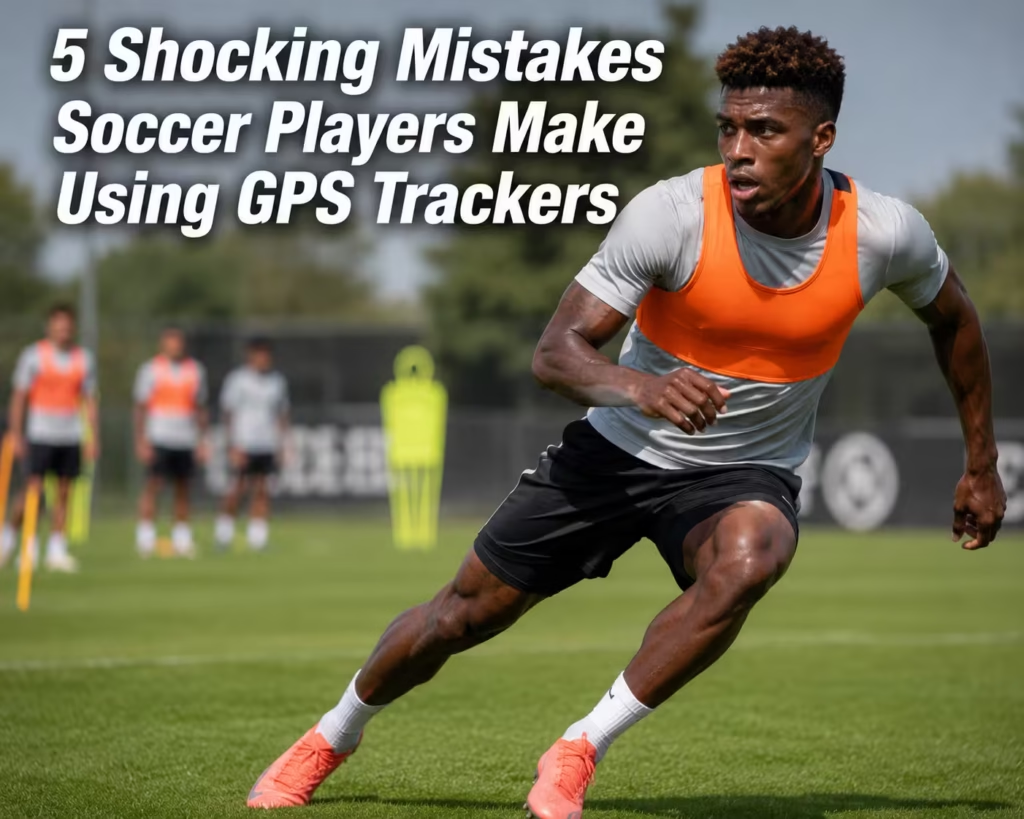

If you have ever seen a player warming up wearing something that looks like a sports bra with a box placed between the shoulder blades you have seen a GPS vest in action. It is not a fashion choice. It is one of the changes in modern soccer.
Here is the part no one talks about. The tracker itself does not make anyone better. Used the way it can quietly waste money mislead a coach or even put a player at risk of injury.. That happens more often than people admit.
I have spent a lot of time around performance data in this area and the same five mistakes soccer players make using GPS trackers keep appearing. In youth academies college programs and weekend adult leagues across the USA, UK and Canada. Lets go through them one by one so your investment in tech actually works.
Why GPS Trackers Became Standard in Soccer

Before we get into the mistakes players make with this technology it helps to understand how we got here.
GPS sensors placed in vests were first seen on Liverpool FC players back in 2013 during training. That was training only though. Match use took longer to arrive.
It was not until the 2015-16 season that FIFA allowed players to use devices during actual matches and clubs did not rush to use them right away. Swansea City was the only Premier League club wearing them in every match at first.
Fast forward to today. The pod sitting between a players shoulder blades is full of technology. The vest holds a pod with a 10Hz GPS chip, an accelerometer and a magnetometer capable of collecting over 1,250 data points every second. That is what lets coaches see distance, top speed, sprint count, sprint distance, power, load and intensity in one dashboard.
Elite clubs like Chelsea, Real Madrid, Ajax and Borussia Dortmund have used this kind of tracking for over a decade. It is no longer a pro-level tool either. GPS vests and foot-worn trackers have spread down to college soccer, high school programs and ambitious individual players.
That is why getting the basics right with GPS wearables matters so much right now. More people are wearing them than ever. Most were never taught how to use the data correctly.
If you are completely new to wearable tracking, start with our How to Use a GPS Tracker: 7 Simple Steps + Pro Tips for Accuracy & Safety guide before buying or using your first device. It explains setup, calibration, positioning, and maintenance so your tracking data is accurate from day one.
Table of Contents
Mistake #1: Wearing the GPS Tracker in the Wrong Position

This is the mistake and it is shockingly common.
The pod needs to sit snug high between the shoulder blades held firmly by a compression vest. If it is loose sliding or worn low the accelerometer picks up bounce and sway instead of real movement. The result is inflated counts, inaccurate load scores and player load numbers that do not reflect what actually happened on the pitch.
A few quick fixes:
Choose a fitted size-appropriate compression vest, not a generic bib
Position the pod between the shoulder blades not off to one side
Re-check the fit every session. Vests stretch and loosen over a season
Never wear the tracker over bulky layers in cold weather without adjusting the fit
I will say this plainly: sloppy placement is the number one reason coaches lose trust in their tracking system. The device is not broken. It is just being worn wrong.
Correct placement is only the first step. Once your device is collecting reliable information, the next challenge is understanding what the numbers actually mean. Our 5 Expert Secrets: How to Analyze Sports Performance Data Using Smart Devices Like a Pro explains how coaches and players turn raw GPS data into smarter training decisions.
Mistake #2: Using GPS Trackers Indoors and Expecting Outdoor-Level Accuracy
Here is a misunderstanding that trips up a lot of players: expecting a satellite-based device to work perfectly under a roof.
GPS relies on a line of sight to satellites. Indoor arenas, futsal courts and covered training domes block or bounce that signal, which reduces accuracy significantly. Distance and speed numbers recorded indoors are often unreliable wildly so.
Players and coaches in Canada and the northern USA face this constantly during winter seasons. The workaround is not complicated:
For sessions use inertial or foot-worn tracking systems designed for indoor accuracy not vest-based GPS
If a GPS vest is all you have treat indoor data as a rough estimate, not a precise benchmark
Do not compare an indoor sessions numbers directly to an outdoor match. It is not an apples-to-apples read
Ignoring this leads to false conclusions like assuming a players fitness dropped when really it was just a foggy signal.
Not everyone needs an expensive professional tracking system. If you’re just getting started, check out our 7 Best Budget Entry-Level GPS Trackers Under $100 for Beginners (Shocking Value Picks!) to compare affordable options that offer excellent value for youth players, parents, and amateur footballers.
Mistake #3: Comparing Data Across Different Tracker Brands
This one catches experienced coaches off guard.
Different manufacturers use algorithms sampling rates and satellite processing methods. So a “sprint” logged by one brands software is not calculated the way as a “sprint” from another. Comparing a players numbers from a Catapult unit one season to a brands device the next season and assuming it is a fair comparison is one of the sneakiest tracking errors in the sport.
What actually works:
Stick with one brand and one firmware version for season-to-season comparisons
If you switch devices treat it as a baseline, not a continuation of old data
When benchmarking against published pro data remember it likely came from a different system entirely
Data consistency matters more than the brand name on the box. My honest take? Loyalty to one system beats chasing the “tracker every year.
Choosing the right device from the beginning also helps avoid long-term data consistency problems. Before investing, read our complete Best GPS Trackers for Football Players: Ultimate Guide for 2026 to compare today’s leading GPS vests and wearable tracking systems.
Mistake #4: Ignoring Acceleration and Deceleration Numbers
distance covered gets all the attention because it is the easiest number to brag about.. It is often the least useful metric for injury prevention.
Hard accelerations and sharp decelerations put more strain on hamstrings, knees and ankles than steady jogging ever will. GPS vests can track acceleration and deceleration patterns, which allows coaches to manage training drills and reduce strain on the hamstrings. Skipping that data means missing the metric that predicts soft-tissue injuries.
Watch for:
A increase in high-intensity accelerations compared to a players normal range. Repeated hard decelerations in a short window a common sign of hamstring strain. Asymmetry between a players dominant and non-dominant side when the tech supports it
Coaches focused on the total-distance leaderboard while ignoring accel/decel counts are, frankly looking at the wrong scoreboard.
Choosing the right device from the beginning also helps avoid long-term data consistency problems. Before investing, read our complete Best GPS Trackers for Football Players: Ultimate Guide for 2026 to compare today’s leading GPS vests and wearable tracking systems.
Mistake #5: Chasing Total Distance of Managing Fatigue
This is the mistake soccer players make using GPS trackers that I find the frustrating because it comes from good intentions gone wrong.
Players see a “distance covered” number on the app. Start treating it like a video game high score. They push for every single session without considering cumulative fatigue.. Gps vests track player workload and fatigue specifically so coaches can spot early signs of overexertion before it turns into a muscle strain or tear and tracking workload over time helps prevent overuse injuries by allowing proper rest.
Treat the tracker like a smoke detector, not a scoreboard:
Compare load totals, not single-session peaks to see real trends
Add in recovery days when workload goes above a players normal range
Talk to a coach or sports scientist before increasing training volume based on the numbers alone
In my opinion the healthiest teams are the ones that use this data to hold players back sometimes not just push them harder. That is the point of the tool.
A Quick Look for USA, UK and Canada Players
The technology is the same but a few regional notes matter:
USA: College soccer programs increasingly use GPS data during recruiting evaluations alongside match footage and combine results.
UK: Since the FIFA rule change allowed for match-day wearables English clubs from the Premier League down to lower divisions now use them regularly both in training and live games.
Canada: Long indoor seasons make Mistake #2 especially relevant. Budget for appropriate tracking, not just an outdoor GPS vest.
GPS tracking should support your speed development not encourage overtraining. Pair workload monitoring with our How to Increase Sprint Speed in Football at Home 2026 Without Costly Mistakes guide to build explosive pace while reducing unnecessary injury risk.
Final Whistle
GPS trackers are one of the best tools soccer has ever added to training grounds.. A device only reports what it sees and it cannot fix careless habits around fit, environment, brand consistency or how the data is actually used.
Avoid these five mistakes soccer players make using GPS trackers and the numbers on that app finally start telling you the truth about your game.
FAQ: Mistakes Soccer Players Make Using GPS Trackers
Do GPS trackers work accurately indoors?
Not reliably. GPS needs a clear line of sight to satellites, so indoor arenas and covered training domes reduce accuracy. Foot-worn or inertial trackers are a better fit for indoor sessions.
Where should a soccer GPS tracker be positioned?
Between the shoulder blades, held snug by a properly fitted compression vest. A loose or shifting pod creates inaccurate movement data.
Can I compare GPS data between two different tracker brands?
Not directly. Different brands use different algorithms and sampling methods, so numbers aren’t calculated the same way across systems.
What’s more important: total distance or acceleration data?
Both matter, but acceleration and deceleration counts are more closely tied to injury risk, especially for hamstrings, than total distance covered.
When did FIFA allow GPS trackers in official matches?
FIFA approved wearable devices for match use starting in the 2015-16 season, after several years of training-only use at clubs like Liverpool FC.
If you need information about Performance & Tracking Systems: IFAB Laws of the Game – Electronic Performance & Tracking Systems


