
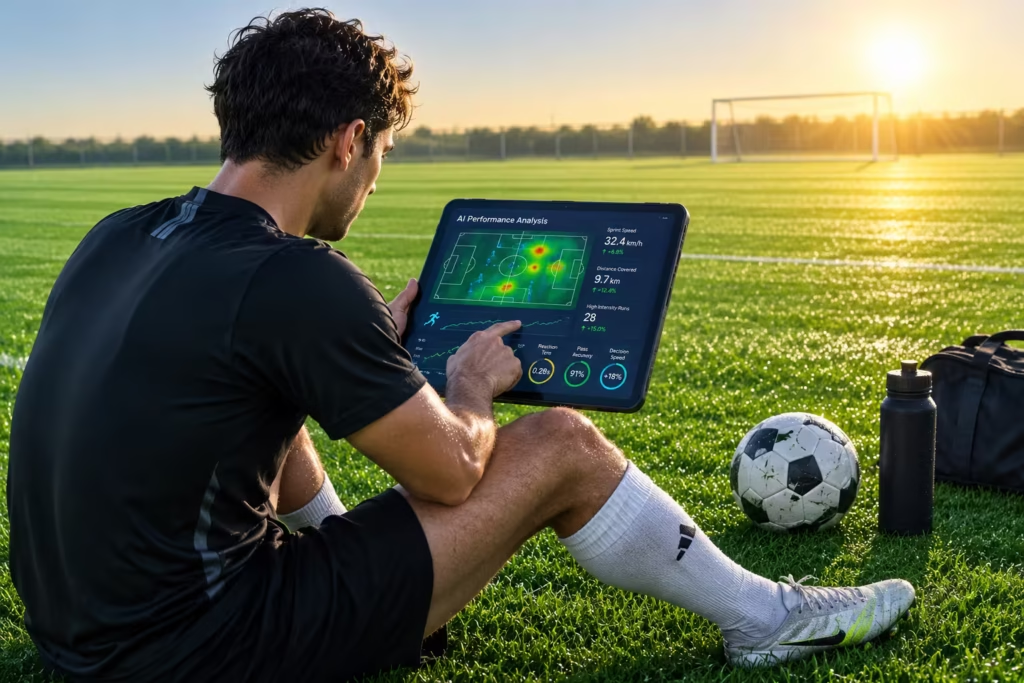


AI helps football players think faster during a game because of artificial intelligence. Artificial intelligence looks at what’s happening in the game and predicts what the other team will do. It also gives players feedback away that helps them make good decisions quickly.
Modern football is not about how fast you can run. It is about how fast you can think. The best football players can read the game. Know what is going to happen. They can make decisions in a split second. If you are slow by a little bit, you can lose the ball or miss a chance to score. Artificial intelligence is transforming how players process information. Organizations like FIFA Innovation are actively exploring AI-driven performance tools to improve decision-making at all levels of the game.
Artificial intelligence is changing the way football players think. It uses tools to help players process information and react faster. This means football players can make decisions during a game. Artificial intelligence helps football players in many ways. There are eight ways that AI helps football players think faster. There are also three mistakes that football players make when they use artificial intelligence.
AI bridges this gap by training players to recognize patterns earlier, anticipate outcomes, and act instinctively. If you want a deeper breakdown of how this works in modern gameplay, check out How AI Improves Soccer Decision-Making and Game IQ In 2026 (With Real Training Examples).
Table of Contents
What Does It Mean When AI Helps Football Players Think Faster?

Thinking faster in football refers to reducing the time between perception and action. This includes recognizing patterns, evaluating options, and executing decisions instantly.
AI improves this process by:
- Analyzing large volumes of match and training data
- Identifying patterns players may not consciously notice
- Delivering insights that improve anticipation and awareness
Elite players typically make decisions in under one second. AI helps reduce hesitation and improves consistency in those decisions.
AI enhances this process by analyzing large datasets from matches and training. Many of these insights come from advanced tracking systems—explained in detail in Football GPS Metrics Explained 2026: The Ultimate Way to Improve Performance.
Elite players often make decisions in under one second. AI helps reduce hesitation and improves consistency at that level.
How AI Helps Football Players Think Faster in Real Match Situations
During a match, players constantly process multiple variables:
- Opponent positioning
- Teammate movement
- Available space and passing lanes
AI systems simulate these situations in training environments, allowing players to:
- Recognize patterns earlier
- Predict outcomes more accurately
- React instinctively under pressure
This results in quicker, more confident decisions during real gameplay.
AI-powered systems simulate these conditions in training environments. These systems are part of modern performance setups like those covered in Best AI Soccer Training Systems: 8 Proven Technologies That Improve Performance: For Professionals and Beginners.
8 Proven Methods Showing How AI Helps Football Players Think Faster
1. Real-Time Decision Intelligence Systems
AI platforms analyze gameplay scenarios and provide actionable insights that help players choose the best option instantly. AI systems used by platforms like Catapult Sports Technology analyze player movement and workload to improve performance and decision-making.
2. Wearable Tech Enhancing Cognitive Performance

Wearable devices track:
- Heart rate
- Movement intensity
- Fatigue levels
AI uses this data to ensure players maintain optimal mental sharpness throughout training and matches. If you want a full breakdown, see 10 Proven Benefits of Wearable Tech in Soccer Training (2026 Guide with AI Insights & Real Data).
3. AI-Powered Video Analysis
AI automatically identifies key decision-making moments in match footage, allowing players to learn faster without reviewing hours of video.
4. Neural Training Simulations
Virtual reality and AI-driven simulations recreate match scenarios, improving reaction time and situational awareness.
5. Predictive Analytics for Game Awareness
AI models predict opponent behavior based on historical data, helping players anticipate plays before they unfold.
6. Smart Coaching Assistants
AI dashboards provide coaches with real-time tactical recommendations, which can be communicated to players for faster decision-making.
7. Injury Prevention Supporting Mental Sharpness
Fatigue slows decision-making. Many teams use GPS-based tracking systems—explore options in Best GPS Trackers for Football Players: Ultimate Guide for 2026.
8. Personalized Cognitive Training Programs
AI creates tailored drills to improve individual performance. Many of these drills use tools listed in 9 Amazing Game-Changing Soccer Training Tools (That Actually Improve Performance Fast).
Case Study: AI Improves Decision-Making Speed by 30%
A competitive football academy implemented AI-driven tools, including:
- Video analysis software
- Wearable tracking systems
- Cognitive simulation training
Within one season, results showed:
- 30% improvement in decision-making speed
- Increased pass accuracy
- Better positioning awareness
This demonstrates how structured AI integration can significantly enhance performance.
AI-powered training platforms recreate these high-pressure match scenarios in controlled practice environments, allowing players to develop game intelligence before stepping onto the field. If you’d like to explore how these systems enhance split-second decisions with real-world training examples, read our comprehensive guide on How AI Improves Soccer Decision-Making and Game IQ in 2026 (With Real Training Examples).
3 Negative Mistakes to Avoid When Using AI in Football Training
Mistake 1: Over-Reliance on AI Tools
Depending too heavily on AI can reduce a player’s natural instinct and creativity. AI should support decision-making, not replace it.
Mistake 2: Ignoring Human Coaching Insight
AI lacks emotional intelligence and leadership. Coaches provide context, motivation, and tactical nuance that technology cannot replicate.
Mistake 3: Misinterpreting Data
Incorrect analysis of AI-generated data can lead to poor training decisions. Proper understanding and expert guidance are essential.
AI vs Traditional Football Training
| Factor | AI Training | Traditional Training |
| Decision Speed | High | Moderate |
| Personalization | Advanced | Limited |
| Feedback Speed | Real-time | Delayed |
| Data Accuracy | High | Variable |
Expert Insight
Performance analysts emphasize that AI is most effective when combined with human expertise:
“AI accelerates decision-making development, but instinct and creativity remain essential for elite-level performance.”
The Future of AI in Football Cognitive Performance
AI technology continues to evolve rapidly. Future developments may include:
- Real-time AI assistants during matches
- Advanced brain-training systems
- Fully automated tactical analysis
These innovations will further enhance how players process information and make decisions under pressure.
FAQs: How AI Helps Football Players Think Faster
1. Can AI really improve how football players think faster during matches?
Yes—AI improves decision-making by analyzing player positioning, opponent pressure, and passing options in real time. This reduces reaction time and enhances awareness. The most effective results occur when players train with AI simulations that replicate real match conditions.
2. What types of AI tools are used in football training?
Teams use AI-powered video analysis tools, wearable tracking devices, and simulation technologies. These tools collect and analyze performance data, helping players improve decision-making, positioning, and overall game intelligence.
3. How does wearable technology support faster decision-making?
Wearable devices track fatigue, heart rate, and movement patterns. AI analyzes this data to identify when mental performance may decline, allowing coaches to adjust training or substitutions and maintain optimal cognitive performance.
4. Is AI training suitable for beginner football players?
Yes, AI can simplify complex tactical concepts and improve learning speed for beginners. However, it should always be used alongside traditional coaching to ensure players develop creativity and instinct.
5. What are the biggest mistakes when using AI in football training?
Common mistakes include over-relying on data, ignoring coaching expertise, and misinterpreting analytics. AI should be used as a support tool rather than a replacement for experience and judgment.
6. How much can AI improve decision-making speed?
AI can improve decision-making speed by approximately 20–30%, depending on how consistently it is used and how well it is integrated into training routines.
7. Does AI replace football coaches?
No. AI enhances coaching by providing data-driven insights, but coaches remain essential for leadership, motivation, and tactical understanding.
8. What is the future of AI in football performance?
The future includes real-time analytics during matches, deeper integration with biometric data, and advanced cognitive training systems that further improve decision-making speed.


