
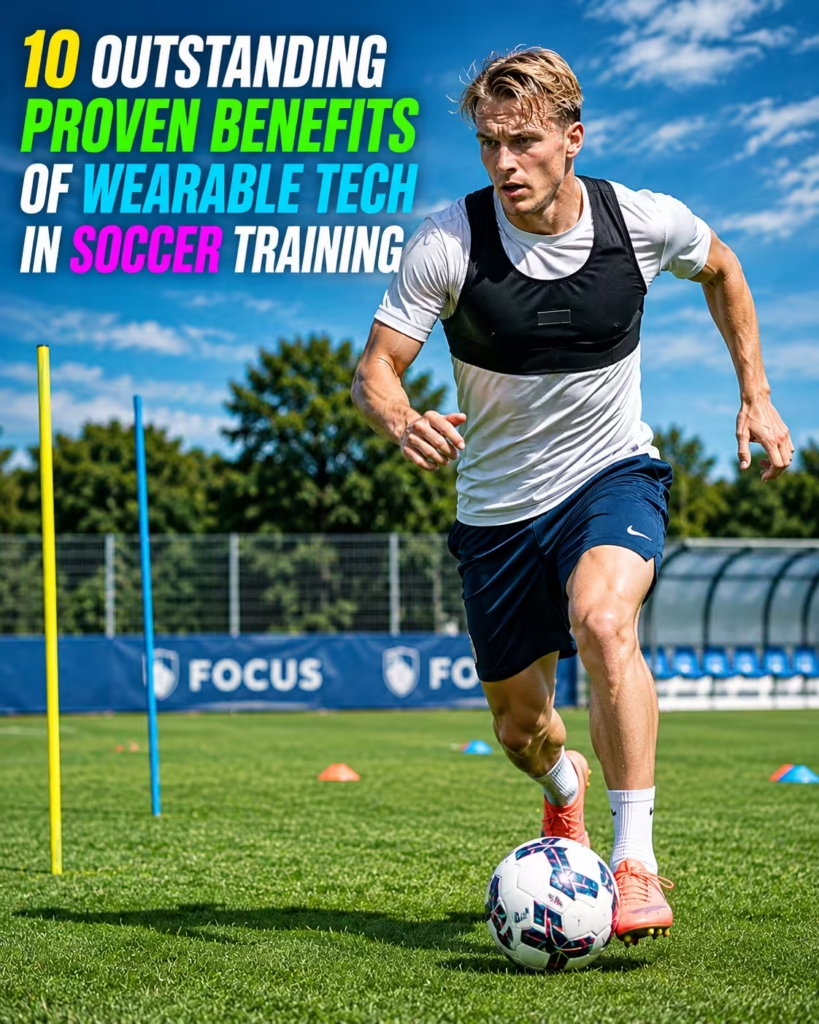


Soccer training is totally different now because of technology. We have things like GPS trackers and special computers that help us see how athletes are doing. This is really helpful for athletes and coaches because they can see what is going on afar. Years ago we did not have this kind of information.
Now there is a lot of competition in soccer from kids to really good teams. So using technology is not something you can choose to do or not do. It is something that can help you win.
In this guide we will tell you about the 10 proven benefits of wearable tech in soccer training. I have ideas for how to use this technology to get better at soccer.
What is wearable tech in soccer training?
Wearable technology in soccer includes any device worn on the body that records physiological and biomechanical data during training and matches. These are:
- These include GPS tracking jackets
- Heart Rate Monitor
- Gyroscopes & Accelerometers
- Smart insoles and boots
- AI-based performance trackers
Devices collect metrics such as
- Distance traveled
- Speed at a sprint
- Zones of heart rate
- Lots of acceleration & deceleration
- Fatigue scores
Why it matters: Coaches can now make data-driven decisions instead of relying solely on observation.
1. Improves Sprint Speed and Acceleration

One of the most immediate benefits of wearable tech is enhanced sprint performance.
How it works:
- GPS sensors track sprint distance and velocity
- Accelerometers measure explosive movements
- Data identifies peak speed zones and inefficiencies
Real-world insight:
A 2024 study in the Journal of Strength and Conditioning Research tracked 28 semi-professional players over ten weeks. The group that adjusted sprint training using GPS data improved acceleration by 8.7%, while the control group saw minimal change.
Practical application:
- Identify sprint fatigue thresholds
- Optimize interval training sessions
- Track progress weekly
If you’re just getting started with GPS tracking, you don’t need to spend a fortune. Here are 7 Budget Entry-Level GPS Trackers Under $100 that still deliver reliable speed and distance data.
2. Enables Real-Time Injury Prevention
A really useful application of wearable tech is injury prevention.
Key metrics:
- Acute: chronic work ratio
- Asymmetry of muscle load
- Signs of Exhaustion
Scientific evidence:
A 2023 review in the British Journal of Sports Medicine found that monitoring acute-to-chronic workload ratios reduced non-contact injuries by up to 30% across multiple team sports, including soccer.
Example:
If a player’s workload spikes suddenly, coaches can:
- Reduce training intensity
- Schedule recovery sessions
- Prevent overuse injuries
Of course, the data only helps if you’re using the device correctly. Many players make basic mistakes that ruin their numbers — I covered the most common ones in 5 Shocking Mistakes Soccer Players Make Using GPS Trackers.
3. Enhances Tactical Awareness with GPS Tracking
Wearables provide detailed positional and movement data.
Benefits:
- Heatmaps of player movement
- Distance covered per position
- Tactical spacing insights
Coaching advantage:
- Improve formations
- Analyze off-ball movement
- Optimize player positioning
Example:
Midfielders can adjust positioning to increase passing lanes and reduce defensive gaps.
4. Optimizes Cardiovascular Fitness with Heart Rate Monitoring
Heart rate monitors allow players to train in specific intensity zones.
Training zones:
- Zone 2: Endurance building
- Zone 3–4: Match intensity
- Zone 5: Maximum effort
Results:
Players training with HR data see:
- Improved VO2 max
- Better stamina
- Faster recovery times
Actionable tip:
Design sessions based on target heart rate zones instead of guesswork.
5. Delivers AI-Driven Performance Insights
Modern wearable systems now integrate artificial intelligence and machine learning.
Features:
- Beat forecast fatigue before it strikes
- Proposed changes to training
- Performance trends on the spot
A collection of short stories.
AI dashboards can recommend:
- Ideal workout loads.
- Recovery Time
- Position-specific enhancements
Competitive advantage:
Teams that use AI wearables make decisions faster and smarter.
But even the best AI dashboard is useless if you don’t know how to read the numbers. I broke down the exact process in How to Analyze Sports Performance Data Using Smart Devices Like A Pro — it’s a five-step framework that actually makes sense.
6. Personalizes Training Programs
Every player is physiologically different. Wearables enable fully customized training plans.
Data-driven personalization:
- Sprint capacity
- Recovery rate
- Heart rate variability
Outcome:
- Reduced burnout
- Faster skill development
- Higher performance consistency
7. Improves Recovery and Load Management

Recovery is just as important as training.
Wearables track:
- Sleep quality
- Recovery scores
- Muscle fatigue
Benefits:
- Prevent overtraining
- Optimize rest days
- Maintain peak performance
Example:
If recovery scores drop, training intensity can be adjusted immediately.
8. Supports Youth Player Development
Wearable tech is especially valuable for young athletes.
Advantages:
- Safe workload monitoring
- Injury prevention during growth phases
- Skill development tracking
Parent & coach benefits:
- Transparent progress tracking
- Objective performance data
- Safer training environments
That kind of clear progress data isn’t just useful for training — it can also catch the eye of college recruiters. If you’re aiming for the next level, read How to Get Recruited for College Soccer with No Experience Quickly to turn your development into real opportunities.
9. Enhances Coaching Decisions and Team Strategy
Coaches now rely on data-backed insights rather than intuition alone.
Use cases:
- Substitution timing
- Tactical adjustments
- Training load distribution
Example:
If a player shows fatigue indicators mid-session:
- Adjust drills
- Rotate players
- Prevent performance drops
10. Provides Measurable ROI for Teams and Coaches
Investing in wearable tech delivers measurable returns.
ROI factors:
- Reduced injury costs
- Improved player performance
- Time saved in analysis
Sample ROI scenario:
- Fewer injuries = lower medical expenses
- Better performance = improved match outcomes
Key takeaway:
Wearables are not just a cost they are a performance investment.
Comparison: Types of Wearable Tech in Soccer
| Feature | GPS Tracker | Heart Rate Monitor | AI Wearable System |
| Tracks distance | ✅ | ❌ | ✅ |
| Measures intensity | ✅ | ✅ | ✅ |
| Predicts fatigue | ❌ | ❌ | ✅ |
| Tactical insights | ✅ | ❌ | ✅ |
| AI recommendations | ❌ | ❌ | ✅ |
How to Implement Wearable Tech in Soccer Training (Step-by-Step)
- Choose the right device (GPS, HR, or AI-based)
- Define performance goals
- Collect baseline data
- Analyze metrics weekly
- Adjust training programs
- Monitor recovery and fatigue
- Continuously optimize
Frequently Asked Questions
What wearable tech is best for soccer training?
GPS trackers combined with heart rate monitors offer the best balance of performance and affordability. Advanced teams benefit from AI-powered systems.
Can wearable tech improve soccer performance?
Yes. Studies show measurable improvements in speed, endurance, and injury reduction when data-driven training is applied.
Are wearable devices accurate?
Modern devices offer high accuracy (within 1–3%), especially when calibrated correctly.
Is wearable tech suitable for youth players?
Absolutely. It helps ensure safe training loads and supports long-term development.
Expert opinion
The biggest shift we’ve seen is the move from reactive to proactive training. Wearables let us see trouble coming and adjust before the player breaks down.” — Mike Davidson, CSCS, who works with collegiate soccer programs in the Midwest.
Conclusion: The Future of Soccer Training Is Data
Wearable technology is transforming soccer training, coaching and play. Injury prevention and AI-driven insights provide a competitive advantage at all levels of the game.
Teams and athletes who use wearable tech today are not only enhancing performance, they are preparing their training systems for the future.
Once your wearable setup is dialed in, pair it with the right physical training gear. Here are 9 Amazing Game-Changing Soccer Training Tools that actually deliver results on the field — not just in the data dashboard.
Final Takeaway
If you want to do so:
- Train wisely.
- Reduce injuries.
- Enhance performance
Then wearable tech is not a choice; it’s a necessity.
Authored by a performance analyst specializing in soccer training technology, GPS tracking systems, and athlete monitoring. This guide draws on current research (2023–2026) and practical application in competitive training environments.